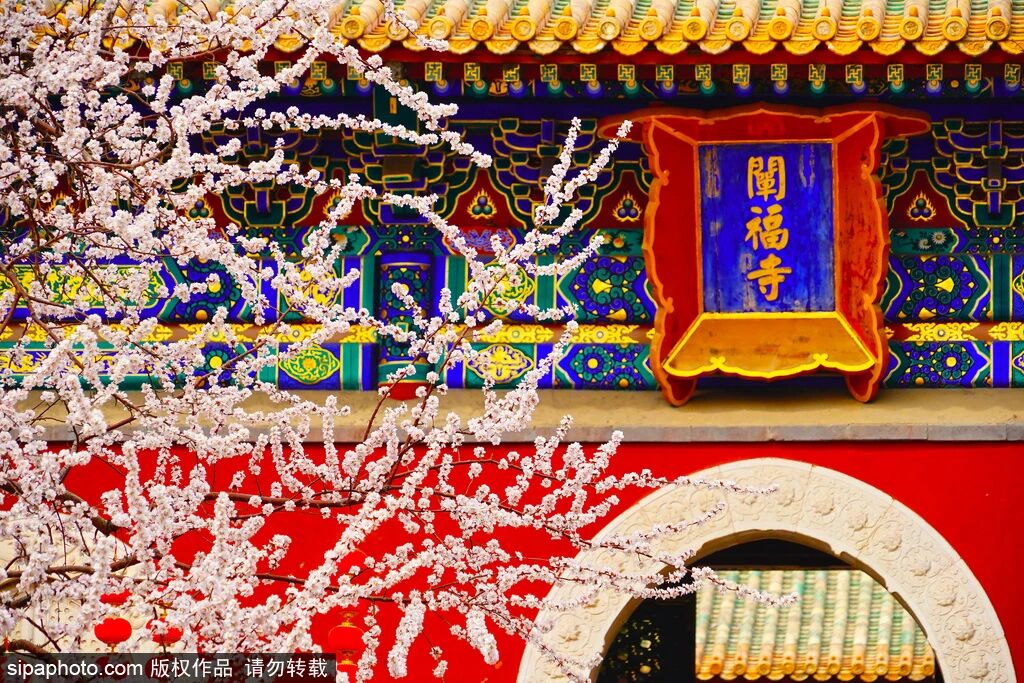
In the 26th year of the Kangxi reign (1687) of Qing Dynasty, the construction of Changchun Garden was completed. Changchun Garden was built by Emperor Kangxi on the site of the “Qinghua Garden” of Li Wei, the grandfather of Emperor Shenzong of Ming. Particularly fond of this garden, Emperor Kangxi named it “Changchun” with the meaning of “spring all year round, winds blowing from all directions, and six qi circulating smoothly.”
According to The Study of Old Beijing News, the Changchun Garden faces south with the southern part of the garden housing palaces for political discussions and residence, while the northern part features a water-themed garden. It can be inferred that the Changchun Garden is the first imperial garden in the western suburb of Beijing with dual functions of both a royal court and a recreational park. Covering an area of approximately 900 acres, the main buildings are divided into three sections - central, east, and west - each forming a distinct system yet interconnected. To the west of the garden lies the West Garden, with lakes scattered around and various buildings where young princes resided.
Changchun Garden features landscape scenery, with simple and modest architecture mainly consisting of small pavilions with tiled roofs, devoid of colorful decorations. The garden walls are built with tiger skin stones, while the hills are formed by natural earth mounds, not precious lake stones. Within the garden, there are numerous ancient trees and vines from the Ming Dynasty, as well as flowers such as wintersweet, lilac, magnolia, peony, peach, apricot, and grapevines. Deer, cranes, peacocks, and Chinese bamboo partridges can be found roaming the forest, creating a serene atmosphere. This natural and simple garden style influenced the subsequent construction of the Imperial Summer Resort and the Yuanmingyuan (before the expansion of Qianlong period), among other royal gardens. Various official positions were also established to manage this Garden.
Changchun Garden is the first large-scale “imperial garden” built for Emperor Kangxi in the western suburb of Beijing. Known for its refreshing spring water and tranquil surroundings, it became a favored place for the emperor to relax. In addition to hosting important ceremonies, Emperor Kangxi often conducted political affairs within Changchun Garden, setting a precedent for the practice of “governing away from the hustle and bustle” in the Qing Dynasty.
Changchun Garden suffered destruction twice, first by the Anglo-French allied forces and then by the Eight-Nation Alliance. By the time of the Republic of China, the site of Changchun Garden had turned into a wilderness, with only the remnants of the Enyou Temple and Enmu Temple gates. Today, within the former grounds of Changchun Garden, there are residential areas for Peking University faculty, and the new residential area for Peking University students.
Enyou Temple and Enmu Temple Address: Changchun Garden, the Summer Palace Lu (Rd), Haidian, Beijing (West Gate of Peking University)