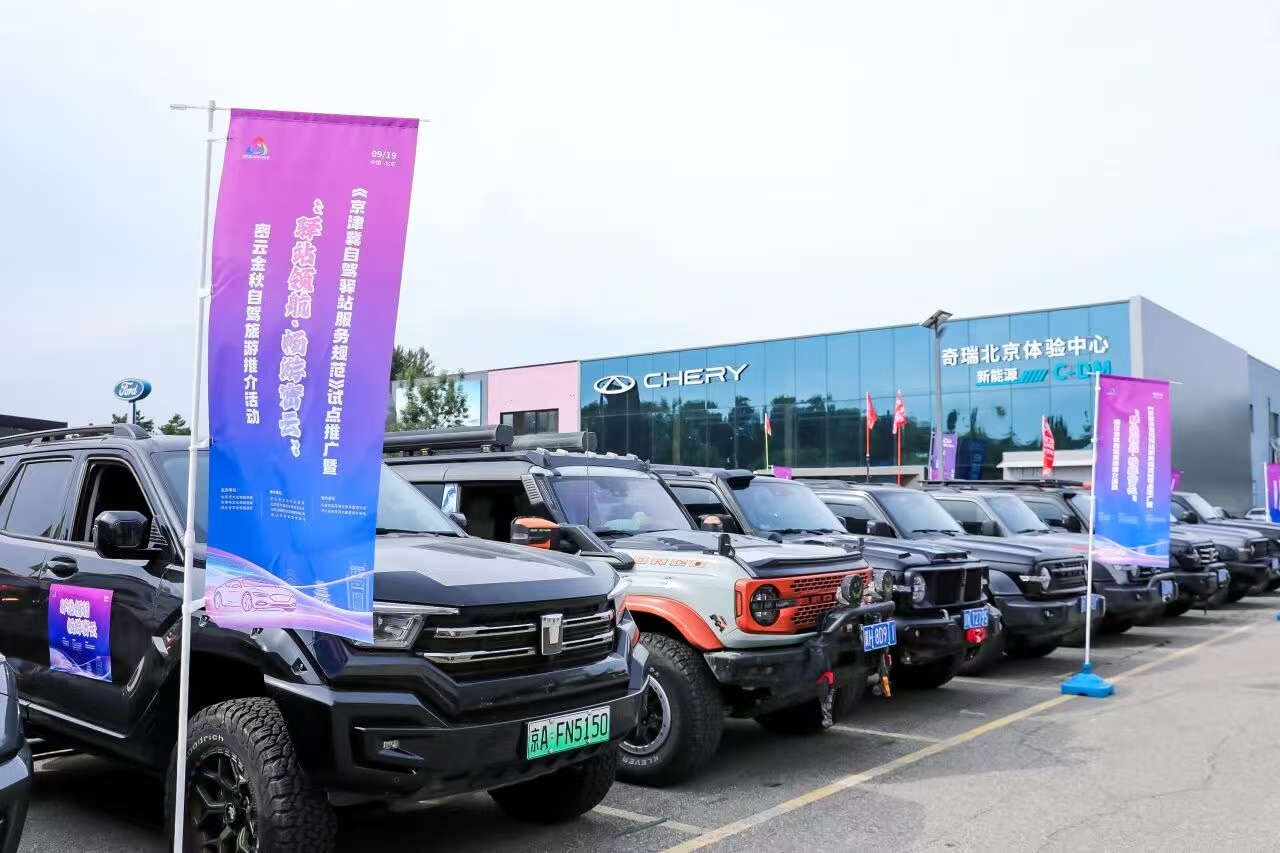
On September 19, 2025, the pilot promotion event of the "Beijing-Tianjin-Hebei Self-Driving Post Service Standards" (hereinafter referred to as the "Standards"), hosted by the cultural and tourism departments of Beijing, Tianjin, and Hebei, and co-organized by the self-driving tourism associations of the three regions and other institutions, was held in Miyun, Beijing. This event responds to the call for "building a powerful transportation country" and "integrating culture and tourism", aiming to effectively enhance the attractiveness and competitiveness of the Beijing-Tianjin-Hebei self-driving tourism market.
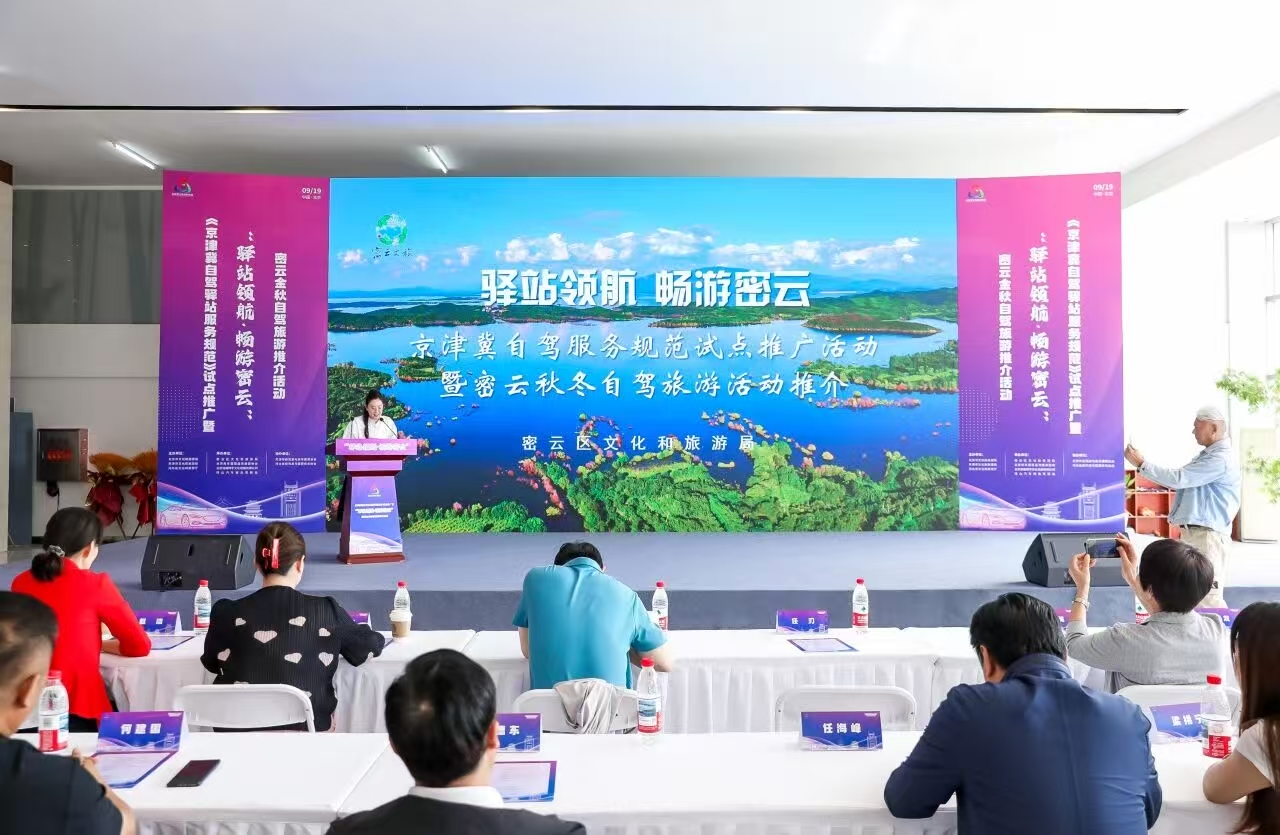
With the pilot promotion of the "Standards" as the core, this event has designated several newly recognized entities as benchmark pilot units for implementing the "Standards". These units include Tianbao Nasutu Campsite, Beijing Sun Valley, Changyu AFIP Castle Winery, Yishi Manor, Beijing Yunlongjian Natural Scenic Area, Miyun Tourism Distribution Center, Tianmen Mountain Scenic Area, and Bee World. Through practical testing of the standards, setting examples, and deepening regional cooperation, these units will lay the foundation for building a high-standard Beijing-Tianjin-Hebei self-driving post network.
The self-driving tourism associations of the three regions organized self-driving clubs to conduct a tour in Miyun with off-road vehicles, RVs, and new energy vehicles. Over 100 self-driving enthusiasts from Beijing, Tianjin and Hebei drove their cars through the gray-brick and black-tile lanes of Gubei Water Town, traveled along the winding mountain roads of Yunmeng Mountain, visited the magnificent Simatai Great Wall, and admired the vast misty waters of Miyun Reservoir. The rustling sound of wheels rolling over fallen leaves will be the most beautiful melody of this autumn! Tourists are welcome to come to Miyun to enjoy the beautiful scenery, taste fine wines and delicious food, and experience the artistic conception of "driving through mountains to chase the wind and clouds, and dwelling in a landscape like a poetic painting".
The "Standards" were jointly drafted by the Beijing Municipal Bureau of Culture and Tourism, Tianjin Municipal Bureau of Culture and Tourism, Hebei Provincial Department of Culture and Tourism, Tourism College of Beijing Union University, Beijing RV Camping and Self-Driving Tourism Association, Tianjin Self-Driving and RV Camping Association, and Hebei Self-Driving and Camping RV Association. It was released and implemented on September 1, 2023, becoming China's first regional self-driving service standard.
Beijing-Tianjin-Hebei Self-Driving Posts: Key Hubs in the Self-Driving Network
The expressway network has developed rapidly. By the end of 2024, the total length of expressways in Beijing, Tianjin and Hebei exceeded 11,300 kilometers. 2024 marks the 10th anniversary of the coordinated development of Beijing-Tianjin-Hebei. A national expressway backbone network centered on Beijing, consisting of 7 radial lines from the capital, 2 north-south vertical lines and 3 east-west horizontal lines, has been formed, and the Beijing-Tianjin-Hebei "one-hour transportation circle" has been established.
Many highways have naturally formed tourism belts, which are suitable for self-driving trips. Market demand continues to grow. Self-driving tourism has become an important way for modern people to pursue free and personalized travel. Its market scale continues to expand, and the demand for self-driving tourism services is increasing day by day.
The post network connects scenic spots, villages and transportation nodes in Beijing-Tianjin-Hebei. In 2023, the proportion of the three regions serving as mutual source markets for tourists reached 55%, and this proportion further increased in 2024, driving comprehensive cultural and tourism consumption to exceed 50 billion yuan and directly boosting the income growth of residents along the routes.
Continuous Improvement in Practice: Establishing a Standardized and Characteristic Service System
Since the implementation of the "Standards" two years ago, the cultural and tourism departments of Beijing-Tianjin-Hebei and the self-driving tourism associations of the three regions have held multiple special seminars. They have conducted in-depth discussions on the applicability, operability and industry leading role of the standards, continuously revised and improved them, and carried out active and effective promotion work.
To serve self-driving tourists, the implementation scope of the "Standards" covers the entire chain from infrastructure construction to information management, involving government departments, operating enterprises, service personnel and supporting industries. It includes multiple levels such as infrastructure construction, equipment upgrading and renovation, and digital payment enhancement, meeting basic needs such as parking, water supply, charging, rest and catering.
The "Standards" specify criteria for post site selection, facility configuration and service processes. For example, each post should have 10 parking spaces for small vehicles, new energy vehicle charging piles, and barrier-free toilets. These requirements promote the transformation of Beijing-Tianjin-Hebei self-driving posts from "extensive management" to "refined management", and improve the overall service quality of the industry.
Through a unified service evaluation system and regular inspection mechanism, operating enterprises are urged to optimize management, reduce service gaps, and form a sound competitive mechanism. Efforts are made to improve service quality and create characteristic functions, promoting the service system to enter a stage of high-quality implementation.
The core of the "Beijing-Tianjin-Hebei Self-Driving Posts" lies in a unified standard system. This ensures that whether the post is located in Yanqing (Beijing), Jizhou (Tianjin) or Zhangjiakou (Hebei), self-driving tourists can enjoy a high-quality experience with unified signs, consistent services and reliable safety. The system upgrades existing facilities in the region—such as highway service areas, scenic spot distribution points and village entrances—with standardized management and additional functions. It endows these facilities with one-stop service capabilities including rest and supply, information consultation, cultural display, local product sales and emergency rescue, completely solving the pain points of self-driving tourists such as "where to park, where to stop and what to play".
Integrating Transportation and Tourism to Boost Consumption: A New Future for Regional Tourism
Beijing, Tianjin and Hebei are rich in tourism resources. They are home to 8 world cultural heritages, cover almost all types of landforms, and boast profound historical and cultural heritage as well as unique natural scenery. The source market covers a population of about 400 million in the three regions and surrounding provinces.
Since the implementation of the "Standards", the associations of the three regions have made great progress in the integration of the Beijing-Tianjin-Hebei self-driving market, effectively reducing problems such as high costs and poor convenience caused by inconsistent standards. Tourists can enjoy shared self-driving resources among the three regions, which reduces costs and improves experience. As a result, the competitiveness of the Beijing-Tianjin-Hebei self-driving market in China has been significantly enhanced.
At present, more than 40 posts have been established in the Beijing-Tianjin-Hebei region, and 12 gas station posts have been built in cooperation with Sinopec, forming a preliminary service network. It is expected that by the end of 2025, the total number of posts will expand to 100, forming a more complete self-driving service network and further promoting the integrated development of cultural and tourism consumption and transportation services in Beijing-Tianjin-Hebei.