
As the capital of China, Beijing boasts a rich history, vibrant culture, and profound heritage. It is also blessed with beautiful landscapes, offering countless sights that are stunning in every season. For first-time visitors wondering how to explore Beijing, here’s a 3-day travel guide.
DAY 1: Summer Palace, Temple of Heaven

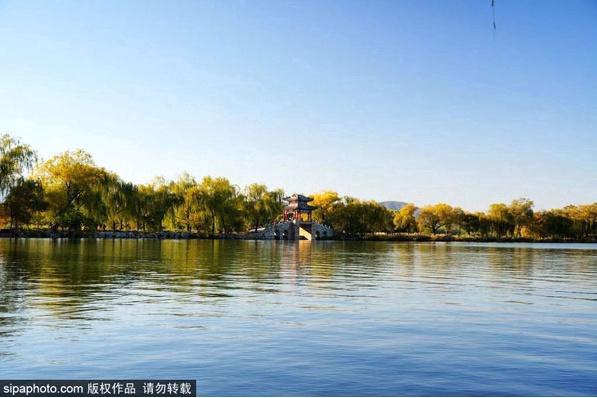
The main scenic area of the Summer Palace consists of Longevity Hill and Kunming Hu(Lake), covering an area of 3.08 square kilometers, with water making up about three-quarters of the park. The site features around 70,000 square meters of various palaces and ancient gardens and is renowned for its precious cultural relics. It is one of the first national key cultural heritage sites and is classified as a 5A scenic area.
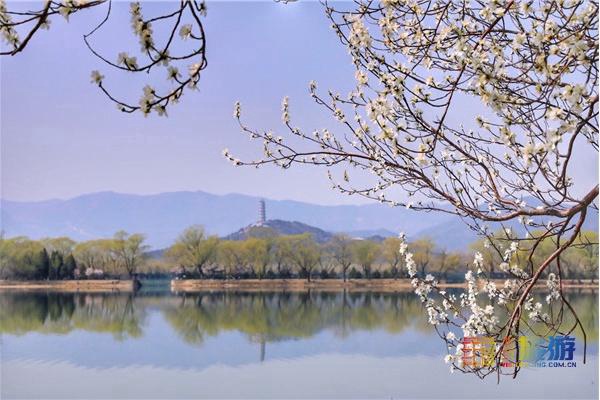
Originally known as Qingyi Garden, construction began in the 15th year of the Qianlong Emperor's reign (1750). It was burned by the Anglo-French Allied Forces in 1860. In the 12th year of the Guangxu Emperor's reign (1886), the Qing government repurposed naval funds for reconstruction, renaming it the Summer Palace after two years as a retreat for Empress Dowager Cixi. It was again damaged by the Eight-Nation Alliance in 1900 and restored in 1902. After the founding of the People's Republic of China, the Summer Palace underwent several renovations, gradually restoring key scenic areas like the Four Great Regions, Suzhoujie (St), Jingming Tower, Daning Hall, Wenchang Courtyard, and the Farming and Weaving Picture.
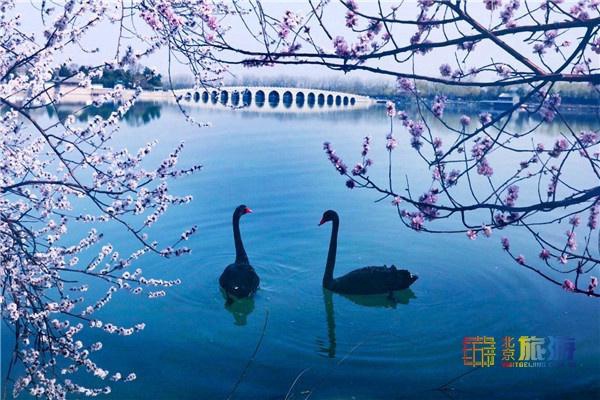
The Summer Palace exemplifies the traditional art of garden design, harmonizing with the surrounding mountainous and watery environment. It showcases the grandeur of royal gardens while embodying the charm of nature, reflecting the Chinese gardening principle of "though made by man, it seems to be from heaven."
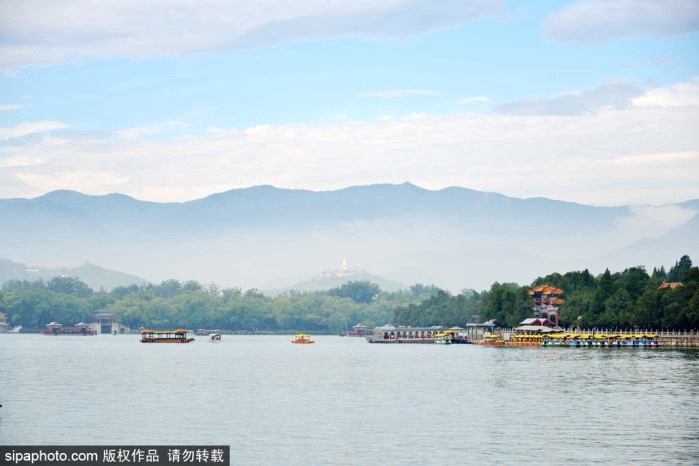
In December 1998, the Summer Palace was listed as a UNESCO World Heritage Site, receiving praise for being an outstanding representation of Chinese landscape gardening, harmoniously blending artificial landscapes with nature. The Summer Palace embodies the essence of Chinese gardening philosophy and practice, which plays a crucial role in the development of Eastern garden art and culture. Representing Chinese royal gardens, the Summer Palace serves as a powerful symbol of one of the world's great civilizations.
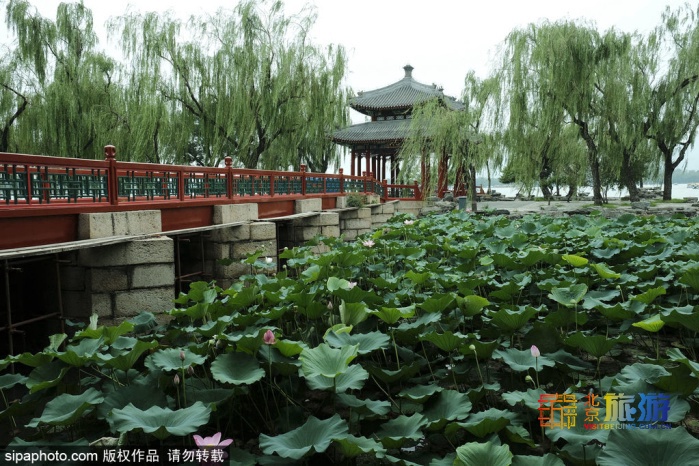
As a royal garden, the Summer Palace is not only rich in cultural heritage but also offers stunning natural scenery, with each season presenting its own beauty. In spring, the garden blooms with flowers, especially the peach blossoms along the west embankment of Kunming Hu(Lake), creating picturesque views. In summer, boating on Kunming Hu(Lake) provides breathtaking vistas. In autumn, the park is adorned with red leaves, particularly fragrant with osmanthus during the Mid-Autumn Festival and National Day. In winter, the famous sight of the Seventeen-Arch Bridge is "golden light piercing the arch", and in deep winter, Kunming Hu(Lake) transforms into a natural outdoor ice skating rink, offering views of the snowy Xishan Mountains if you're lucky.
The Tingliguan Restaurant
While exploring the Summer Palace, you can also enjoy delicious food at the Tingliguan Restaurant. Established in 1750, it is one of the thirteen major buildings in the Summer Palace. Originally built by Emperor Qianlong to celebrate his mother's birthday, it later served as a venue for Empress Dowager Cixi and royal relatives to watch performances and dine. Today, it is a time-honored brand, a national-level restaurant, and a famous Chinese medicinal cuisine establishment.
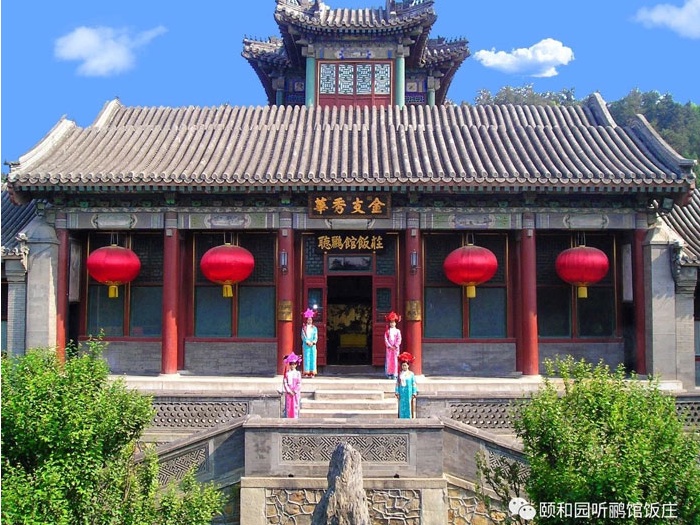
Since its opening, the Tingliguan restaurant has hosted over 200 foreign and domestic leaders, including Zhou Enlai, Deng Xiaoping, Queen Elizabeth II, and George Bush. Covering 5,626 square meters, it features seven dining halls, including the Shoucan Hall, Fushou Hall, and Medicinal Cuisine Hall, accommodating up to 500 people, making it an ideal venue for business banquets, family gatherings, and various events.
The Tingliguan restaurant is famous for its authentic imperial cuisine, based on the menu of the Summer Palace's "Shoucan Room" and palace archives. It continuously researches and innovates to create dishes that appeal to modern tastes, characterized by their color, aroma, flavor, shape, and meaning. Notably, the secret imperial pastries, red bean buns, winter vegetable buns, pea cakes, and mung bean rolls are renowned both domestically and internationally.
The restaurant also features a traditional stage where you can enjoy performances of opera, palace dances, and Beijing opera while savoring authentic imperial dishes.
Tingliguan Contact Number: 86-10-62881955
Opening Hours:
Peak Season (April 1 - October 31):
Main gate: 6:30 AM - 6:00 PM
Inner garden: 8:30 AM - 5:00 PM
Quiet hours: 8:00 PM
Off-Peak Season (November 1 - March 31):
Main gate: 7:00 AM - 5:00 PM
Inner garden: 9:00 AM - 4:00 PM
Quiet hours: 7:00 PM
No entry is allowed after ticket sales stop, so please leave the park on time.
Ticket Information:
Summer Palace ticket: 30 RMB/person (peak season), 20 RMB/person (off-peak season)
Combined ticket: 60 RMB/person (peak season), 50 RMB/person (off-peak season)
Inner garden: Deheyuan 5 RMB/person; Wenchangyuan 20 RMB/person; Tower of Buddhist Incense 10 RMB/person; Suzhoujie(St) 10 RMB/person.
(Note: 1. The combined ticket includes the entrance ticket and inner garden ticket. 2. Discount tickets are available: 15 RMB for general tickets, 30 RMB for combined tickets, and half price for inner garden discount tickets.)
How to Buy Tickets?
Transportation:
East Palace Gate(Main Gate of the Summer Palace):
Subway: Line 4 to Xiyuan Station
Bus: No.330, 331, 332, 346, 584, 594, 375, 563, 508, 579, 303, 584, Night Bus 8
North Palace Gate:
Subway: Line 4 to Beigongmen Station
Bus: No.330, 331, 332, 346, 584, 594, 375, 563, 508, 579, 303, Sightseeing Line 3
New Palace Gate:
Bus: No.374, 74, 437, 952
South Ruyi Gate:
Parking available; Bus: 374, 74, 437, 952
West Gate of the Summer Palace:
Parking available; Bus: No.469, 539
North Ruyi Gate:
No public transportation or parking available.
Address: 23 Jia Gongmenqianjie(St), Haidian District, Beijing
Phone: 86-10-62881144
Temple of Heaven Park
The Temple of Heaven is located on the east side of Yongdingmennei Dajie(St) in Dongcheng District, Beijing, and was built in the 18th year of the Yongle Emperor's reign (1420) in the Ming Dynasty. Covering an area of 2.73 million square meters, the overall layout is orderly and follows a shape like two cycles, with an inner ring and the other outer ring, divided into the Inner Altar and Outer Altar, with the altar walls being round in the south and square in the north, symbolizing "Heaven is round and Earth is square." The Temple of Heaven was the site for emperors of the Ming and Qing dynasties to worship heaven and pray for good harvests. It is the largest, best-preserved, and most exquisitely designed ancient sacrificial architectural complex in China and the world.
The Temple of Heaven is a cultural symbol of Beijing and an invaluable piece of historical heritage in the history of ancient Chinese architecture. It was listed as a UNESCO World Heritage Site in 1998.
Architecture of the Temple of Heaven
The Temple of Heaven refers to both the Circular Mound Altar and the Altar of Prayer for Good Harvests, which are enclosed by double altar walls, forming the Inner and Outer Altars. The main structures are concentrated along the north-south central axis of the Inner Altar. the Circular Mound Altar, located in the south, is also known as the Altar for Sacrificing to Heaven, where emperors held grand ceremonies during the Ming and Qing dynasties. The Altar of Prayer for Good Harvests, located in the north, includes the Hall of Prayer for Good Harvests, the Hall of Imperial Heaven, and the Gate of Prayer for Good Harvests, separated by walls. The central feature is the Hall of Prayer for Good Harvests, originally named the Great Sacrifice Hall, which was renovated in the 24th year of the Jiajing Emperor's reign (1545) in the Ming Dynasty.
The two altars are connected by the Danbi Bridge, which is 360 meters long and nearly 30 meters wide, sloping from south to north. On both sides of the bridge are vast ancient cypress forests. Inside the west wall of the Inner Altar is the Hall of Abstinence, where emperors would fast before rituals. Between the inner and outer walls to the west are the Divine Music Administration hall and the building that was the Stables for Sacrificial Animals. Key structures within the altars include the Hall of Prayer for Good Harvests, Hall of Imperial Heaven, Circular Mound, Imperial Vault of Heaven, Hall of Abstinence, Hall with No Beams, Long Corridor, and Double-Ring Shaped Longevity Pavilion, along with famous sites such as the Echo Wall, Triple-Sound Stone, and Seven Star Stones.
In 1900, the Eight-Nation Alliance established a command post in the Hall of Abstinence and set up artillery on the Circular Mound Altar. Cultural relics and sacrificial vessels were looted, and many buildings and trees were severely damaged. After the founding of the People's Republic of China in 1949, the government invested significantly in the preservation and restoration of the Temple of Heaven, allowing us to appreciate its current grandeur.
Temple of Heaven Cuisine
The cuisine at the Temple of Heaven features a rich cultural heritage spanning 600 years, blending ritual with culinary art, ensuring that the dining experience is filled with the essence of the Temple. The restaurant offers breakfast and lunch, primarily serving Beijing-style Shandong cuisine, including traditional dishes like Peking Duck and New Beijing cuisine, as well as court delicacies inspired by the Temple's sacrificial ceremonies, such as sauerkraut pot meat and handmade pastries.
The Shiguang Theme Restaurant at the Temple not only offers coffee and tea but also serves as a relaxing cultural space where you can enjoy the tranquility of time within a classical garden.
Visitor Information
Address: 7 Tiantanjia Tiantan Donglu (Rd East), Dongcheng District
Ticket Prices: Entrance ticket 15 RMB/person, combined ticket 34 RMB/person; full-time undergraduate students and below aged 18 (inclusive) can enjoy half price; minors under 18 (exclusive) and seniors aged 60 (inclusive) and above can enter for free with valid identification.
Opening Hours:
Park entrance: 6:00 AM - 10:00 PM (last entry at 9:00 PM)
Attractions within the park: 8:00 AM - 6:00 PM (last entry at 5:30 PM)
The Hall of Prayer for Good Harvests and other attractions are closed every Monday (excluding statutory holidays).
Ticket Purchase: Tickets can be purchased online in advance or at the on-site ticket windows.
Day 2: Yuanmingyuan
Yuanmingyuan, also known as the Old Summer Palace, was first constructed in the 46th year of Emperor Kangxi’s era in the Qing Dynasty (1707). It was composed of three gardens, namely the Yuanming(Garden of Perfect Brightness), the Changchun(Garden of Eternal Spring) and the Qichun gardens (Garden of Elegant Spring). Covering 350 hectares and with a construction area of 160,000 square meters, it is a large imperial palace built by the Qing emperors and operated by them for more than 150 years.
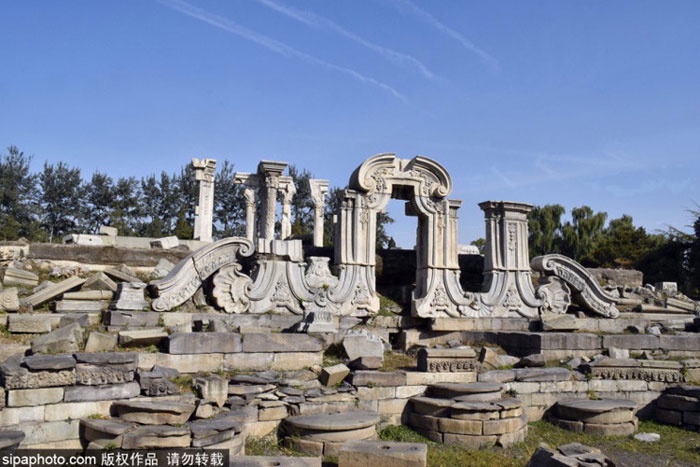
Yuanmingyuan Ruins
The Yuanmingyuan, once known for its magnificent scale, outstanding construction techniques, exquisite architectural landscape, rich cultural collections, and profound national cultural connotations, was praised as "the model of all gardening art" and "the garden of all gardens". But in October 1860, it was looted and burned by Anglo-French coalition forces.
In November 1976, the Administrative Office of Yuanmingyuan was established. In January 1988, Yuanmingyuan Park was announced as a key cultural relic protection site at the national level. On June 29, 1988, Yuanmingyuan Park was officially opened to the public. After requisition of land for two times in 1990 and 1993, Yuanmingyuan Park recovered all its land use right, with the land size equal to the size during the flouring period of Yuanmingyuan. In September 1996, Yuanmingyuan was designated as a National Patriotism Education Base by six ministries and commissions. In November 1998, Yuanmingyuan was designated as the Beijing National Defense Education Base by Beijing National Defense Education Commission.
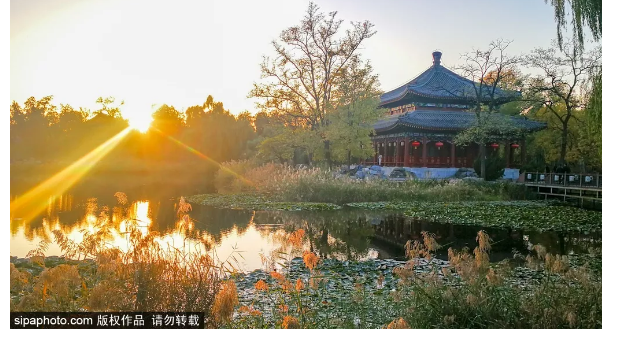
In September 2000, The Plan for Yuanmingyuan Park was officially proved by the State Administration of Cultural Heritage. On November 20, 2008, Yuanmingyuan Park was awarded as one of the “Top 16 New Sceneries of Beijing”, and became one of the 16 charming new business cards which represented Beijing. It is now a AAAAA Tourist Attractions of China.
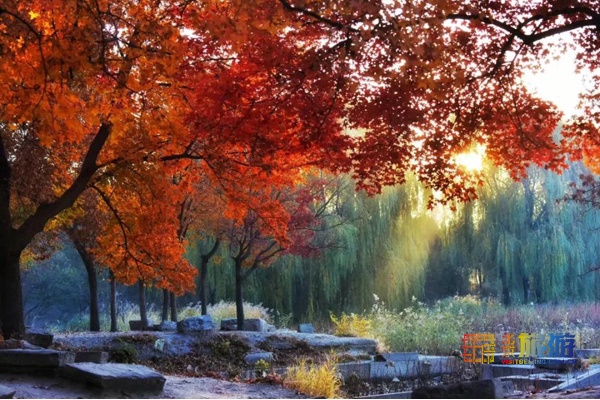
Today, Yuanmingyuan Ruins Park, themed around its historical ruins, has developed into a unique tourist attraction that combines frozen history with vibrant garden landscapes. The topography and water systems in the open areas of the three gardens have largely been restored to their original historical appearance, recreating the charming scenery where mountains and waters intertwine. A botanical landscape featuring pines, bamboo, willows, and lotuses has taken shape, with hundreds of thousands of trees forming lush forests, and seasonal flowers blossoming like a colorful tapestry. Some important ruins have been protected and restored, and a small number of reconstructed garden buildings, such as the New Palace Gate in Qichun Garden, the Jianbi Pavilion, and the European Maze in Changchun Garden, have brought back the splendor of the past. The foundations of some buildings can still be found, and several rockeries remain visible. The stone remnants of the Xiyang Lou(ruins of 18th-century European-style imperial buildings on the grounds of the Yuanmingyuan) are particularly striking. The entire ruins park, especially the magnificent ruins represented by the Xiyang Lou, provides profound historical reflection. It offers both the natural charm of mountains and forests, the distinctive features of historical ruins, and the functionality of a park, making it a rare place for rest and sightseeing.
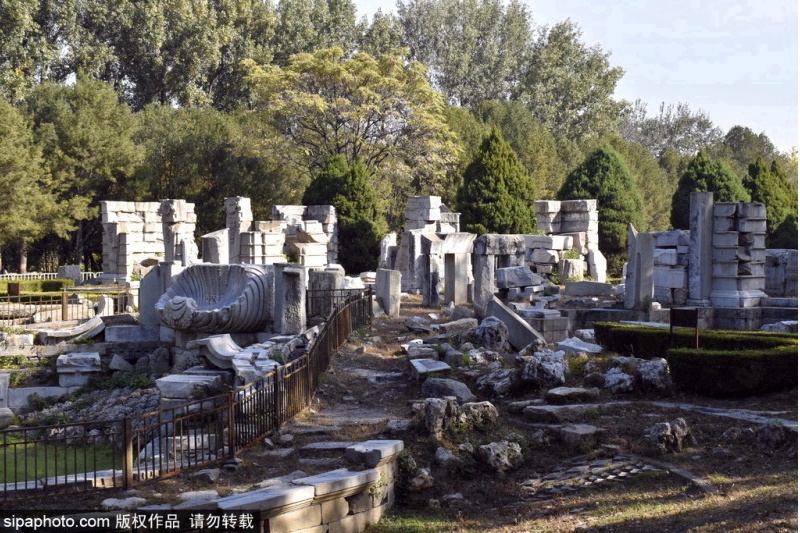
Having endured the vicissitudes of history, Yuanmingyuan Ruins are one of the few remaining fragments of the original structures. Scattered around the park are large stones, and upon reading the nearby descriptions, it’s hard to imagine that these areas once housed grand palaces and halls. The ruins of the maze are also a must-see. Another unmissable spot is the location of the replicated Twelve Zodiac Head Sculptures, where there is an indoor exhibit introducing the history and significance of these national treasures. Some of these treasures have been returned to China, while others remain lost. A visit to Yuanmingyuan will instill a deep understanding of the hard-won prosperity of the nation and evoke strong patriotic sentiments.
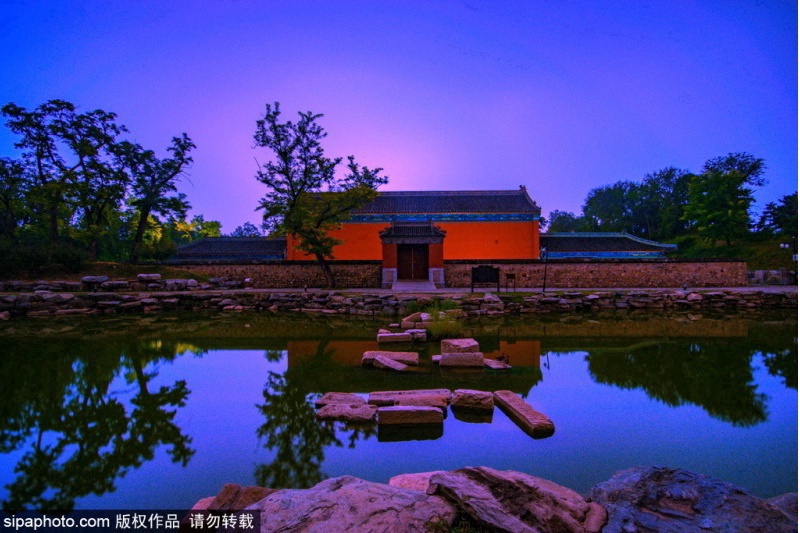
Zhengjue Temple is the only ancient building in Yuanmingyuan that has survived to this day. It holds significant importance for the study of Qing Dynasty history and the architectural style of Yuanmingyuan.
From a natural landscape perspective, Yuanmingyuan is filled with blooming flowers in spring. In summer, the most delightful sight is the lotus flowers covering the large lakes, where boats glide through the lotus blooms, offering views comparable to those of Baiyangdian Lake(northern China's largest freshwater wetland). In autumn, the park is ablaze with red leaves, especially the ginkgo avenue near the East Gate, which is particularly eye-catching. In winter, the park exudes a solemn atmosphere, offering a unique sense of serenity.
Huajia Yiyuan Restaurant
After touring Yuanmingyuan, if you’re looking for a place to eat, Huajia Yiyuan is a great option. This restaurant, located near Yuanmingyuan, is well known for serving Beijing cuisine. It offers dishes like Roast Duck and jingbajian - the eight delicate varieties of Chinese pastries that originated in the kitchen of the Imperial Palace. Some of their more distinctive and popular dishes include Baye Suckling Duck, Yiyuan’s Superior Chicken, Eight Banners Lamb Ribs, and Huajia’s Cabbage. The environment is pleasant, and parking is convenient.
Huajia Yiyuan Address: 28 Qinghua Xilu (Rd West) (West side of Yuanmingyuan Subway Station, Exit A)
Huajia Yiyuan Phone: 86-10-51283379
Ticket Information:
Ticket offices are located at Qichun Garden Palace Gate (5 ticket windows, 8 windows during holidays), Changchun Garden East Gate (2 ticket windows), Second Palace Gate (1 ticket window), and Zaoyuan Gate (1 ticket window).
Main Gate Ticket: Adult ticket: 10 RMB/person; Half-price ticket: 5 RMB/person.
Monthly Pass: 15 RMB/person per month (available from the 25th to the 31st of each month. Bring a 1-inch photo and your previous monthly pass card to the Qichun Garden Palace Gate or East Gate ticket office to renew; card production fee: 0.5 RMB/person).
Xiyang Lou Ruins Scenic Area (including the Grand Waterworks, Exhibition Hall, and Maze): Adult ticket: 15 RMB/person; Half-price ticket: 5 RMB/person.
Panorama Model Exhibition of Yuanmingyuan's Prosperous Period: Adult ticket: 10 RMB/person; Half-price ticket: 5 RMB/person.
Transportation:
Bus Routes: To reach Qichun Garden Gate of Yuanmingyuan, take bus routes No.331, 432, 498, 628, 664, 690, 696, 697, etc. To reach Changchun Garden East Gate, take bus routes No.432, 717, 982, Special Line 4, etc.
Subway: Take Subway Line 4 to Yuanmingyuan Station, Exit B.
Driving: Parking locations and fees:
Vehicles: Qichun Garden Palace Gate lot has 110 spaces; Changchun Garden East Gate lot has 80 spaces.
Bicycles: Bicycle parking is available at Qichun Garden Palace Gate.
Parking fee: 00:00–24:00, Small vehicles: 2.5 RMB/15 minutes; Large vehicles: 2.5 RMB/15 minutes.
Address: 28 Qinghua Xilu (Rd West), Haidian district, Beijing
Phone: 86-10-82670330
Day 3: Nanluoguxiang, Shichahai, Yandai Xiejie(St), and Lotus Market

After spending the day visiting the imperial gardens, you can continue your evening by exploring Nanluoguxiang, one of the busiest and most popular hutongs in Beijing. Nanluoguxiang was built during the Yuan Dynasty and is the only hutong in China that has preserved the "fishbone" structure of Yuan Dynasty hutongs and the grid layout of residential areas. Once home to high-ranking officials and nobility for centuries, it boasts a history of over 740 years and showcases a mix of architectural styles from different periods since the Yuan Dynasty.

Transportation: Take Subway Line 8 or Line 6 to Nanluoguxiang Station.
Shichahai

Shichahai is a must-visit attraction in Beijing, offering a deep blend of history and modernity. Located in Xicheng District in the heart of Beijing, Shichahai consists of three water bodies—Qianhai, Houhai, and Xihai—along with the surrounding hutong neighborhoods. It forms an important part of the historic and cultural city of Beijing. This area is known for its unique natural beauty, rich historical background, and vibrant cultural atmosphere, which attracts numerous tourists every year. Below are some key attractions in the Shichahai area that you must not miss, allowing you to explore the charm of this ancient yet lively urban water system.
Yandai Xiejie(St)(Yandai Diagonal Street)

Located near the northern shore of Houhai, Yandai Xiejie(St) is a historic and charming old commercial street in Beijing. Walking along this 300-meter-long alley feels like stepping back into old Beijing’s daily life. The street is lined with various specialty shops, such as antique stores, calligraphy and painting shops, traditional handicraft stores, and snack stalls. The wide variety of goods and local delicacies allows you to fully experience the traditional flavor of Beijing. Especially at night, when the lights are lit, the ancient stone-paved road reflects the bustling city life, adding a unique touch to the atmosphere.
Due to its geographical features and other reasons, many of Beijing’s hutongs are not laid out strictly from north to south or east to west. Some, like Yandai Xiejie in the Shichahai area, are diagonal. This famous "Chinese Historical and Cultural Street" runs from northeast to southwest, starting at Di’anmen Waidajie(St) in the east and ending at the Yinding Qiao(Bridge) in the west. Despite being less than 300 meters long, it encapsulates the folk customs and everyday life of old Beijing.
There are two main stories behind the name "Yandai Xiejie(St)". One theory suggests that after the Manchus entered China, many Bannermen who lived in the northern part of the city developed a habit of smoking tobacco, particularly dry and water pipes. As demand for tobacco and pipes grew, many tobacco and pipe shops opened on this diagonal street, which eventually became known as "Tobacco Pipe Street". Another theory is that the street itself resembles a tobacco pipe: the eastern entrance looks like the mouthpiece, and the western entrance bends south towards Yinding Bridge, resembling the bowl of a pipe. Over time, the combination of tobacco shops and the street’s shape led locals to name it "Yandai Xiejie."
Hehua Market

Hehua Market is located in the heart of Shichahai and is often referred to as the “back garden” of old Beijingers. The market stretches 280 meters, and in midsummer, it is a stunning sight with blooming lotuses and broad lotus leaves covering the water’s surface. The picturesque scenery is truly captivating. The water is crystal clear, and you can still see the ancient Drum Tower in the distance. On clear days, you can even catch a glimpse of the Western Hills.
During summer, the lush greenery provides lots of shade, and on sunny weekends, you’ll find the Shichahai area buzzing with activity. Small boats glide across the water, while many tourists stroll along the shore, taking photos and enjoying the view. Historically, people often referred to this area as Houhai because it was more bustling, with most of the bars and restaurants concentrated there. In fact, Shichahai encompasses Qianhai, Xihai, Houhai, Lotus Market, and Prince Gong’s Mansion, which is located in the Qianhai area.
Most people begin their tour at Qianhai and stroll north to the Yinding Bridge area, where there are many restaurants and bars to relax in. In the evening, as the lights come on and the neon glows, the weather becomes cooler. The lotus flowers in Shichahai are especially enchanting under the evening sky, and the lotus pond becomes even more serene and elegant, reflecting the purity of the lotus flowers even in the bustling city. In the past, there was a popular saying in Beijing: "Dongdan, Xisi, and in front of the Drum Tower," which referred to three major commercial centers of old Beijing. The area in front of the Drum Tower, which includes Yandai Xiejie, flourished due to the nearby Jishuitan Wharf. Over time, the street evolved from selling tobacco and pipes to offering mounted calligraphy and paintings, antiques, and jade, and has now become a vibrant street filled with delicious snacks, creative crafts, and cultural boutiques.
Address: East side of Shichahai Park, Di’anmen Waidajie(St), Xicheng District, Beijing.
Shichahai Cuisine

Kao Rou Ji is a famous time-honored brand founded during the Xianfeng period of the Qing Dynasty, specializing in Beijing-style grilled meat and halal stir-fry dishes. For over a century, Kao Rou Ji has remained popular, thanks to its "Three Wonders." The first wonder is its grilled lamb. Kao Rou Ji’s grilled lamb is carefully selected and marinated with special seasonings. After being grilled on a custom-made iron plate, the meat is juicy and tender, with no unpleasant odor, often leaving diners wanting more. The second wonder is the scenic view. Yinding Qiao(Bridge) is one of the "Eight Scenic Spots of Yanjing" — the "Yinding Mountain View." It is said that from Yinding Bridge, one can gaze far into the distance and see Beijing’s Western Hills, with the best view being after a rain when the setting sun casts its glow. The third wonder is the lotus flowers. Kao Rou Ji is located within the scenic area of Beijing’s imperial gardens, specifically the Three Seas. While dining at Kao Rou Ji, one can enjoy the sight of the lotus flowers in Houhai, which has been praised by scholars and poets alike for its picturesque beauty.
In the context of Beijing’s grilled meat culture, the phrase "Nan Wan Bei Ji" refers to the famous "Ji" in Kao Rou Ji by Yinding Bridge in Shichahai. In addition to Beijing-style grilled meat, other signature dishes include Deep-fried Prawns, Chicken with Sea Cucumber, and Stewed Pork Knuckle with Bamboo Shoots.
Tongheju, a time-honored brand and a culinary giant in Shandong cuisine, was established in the second year of Emperor Daoguang's reign (1822). Tongheju specializes in Fushan-style Shandong cuisine and has a long history of serving authentic Lu cuisine.
The restaurant has a total operating area of 600 square meters, consisting of six small halls surrounding a central hall of nearly 400 square meters. The decor blends ancient and modern styles, creating a sophisticated, unique, spacious, and well-lit environment. Each small hall has its own distinct style, with their names echoing the restaurant’s name: Tianhe Hall, Dihe Hall, Renhe Hall, Heyue Hall, Tonghe Hall, and Tongle Hall, reflecting harmony with heaven, earth, and people.
Makai Restaurant, located beneath the famous Drum and Bell Towers on Beijing’s northern axis, was founded in 1953 and is renowned for its strong technical expertise. The restaurant specializes in Hunan cuisine, with a wide variety of dishes, especially the smoked meats, fermented bean curd, and chopped chili dishes, which are particularly popular among diners.
Makai Restaurant has recently reopened near its original location, expanding its operating area from 1,500 square meters to 2,700 square meters. The dining environment has also been fully upgraded. While continuing to serve signature dishes such as Sour and Spicy Tripe, Mao's Braised Pork, and Double-flavored Mandarin Fish, the restaurant has also revived some of its "lost" dishes, such as Braised Soft-shelled Turtle, Pig Knuckle, and Steamed Silver Cod, all with higher standards for ingredients and preparation. In addition, they have introduced a range of trendy new dishes, particularly popular with younger customers. The restaurant has also implemented comprehensive food safety management systems, such as "Bright Kitchen" and "Sunshine Dining Project," ensuring customers can dine with peace of mind and enjoy an enhanced dining experience. The combination of high-quality dishes, rich cultural atmosphere, and safe, healthy dining makes Makai Restaurant a shining culinary gem along Beijing’s northern axis.
Shichahai Boat Tours

Shichahai’s waters have withstood over 800 years of history, continuing to support the city’s water transportation culture. As the only open scenic spot in Beijing with large open water, taking a boat tour on Shichahai is one of the most unique ways to experience the area. Additionally, Shichahai is the only place in the city that offers night boat tours.
Since 1989, with the rapid development of tourism in Beijing and the increasing popularity of Shichahai, the area has built six docks. The Shichahai boat tours include both self-operated boats (rowboats) and non-self-operated boats (pedal boats and electric boats). Every spring during the Grain Rain Festival, the Shichahai docks hold an annual traditional ceremony to celebrate the start of the boat tours.
Shichahai is the perfect place to escape the summer heat, and taking a boat ride here offers a special experience. Surrounded by historical and cultural landmarks, you can immerse yourself in Beijing’s rich history and culture while enjoying the cool breeze on the water, as if momentarily leaving behind the worries of daily life and enjoying the peaceful atmosphere.


