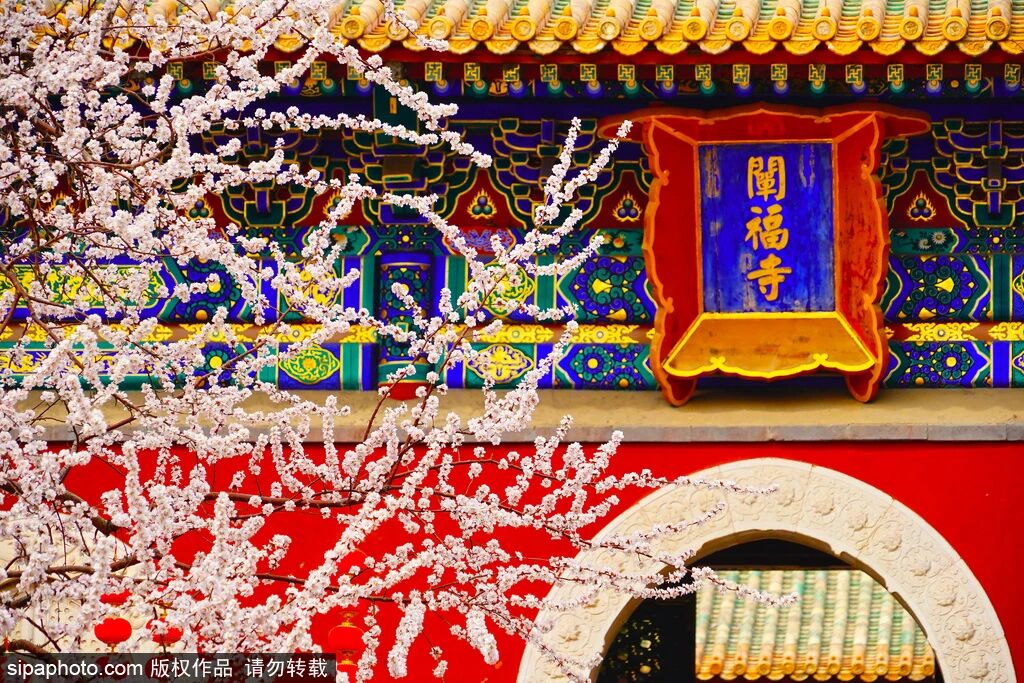
The total route is 740 meters long and includes one boutique street within Wanping Fortress. Along the way, visitors pass by Wanping Fortress, Lugou Bridge, and The Museum of the War of Chinese People's Resistance Against Japanese Aggression. As the sun sets, Lugou Bridge appears grand and magnificent, with its large and small stone lions serving as unique historical markers. Lugou Bridge is also one of Beijing's most beautiful spots for moon viewing.
Lugou Bridge
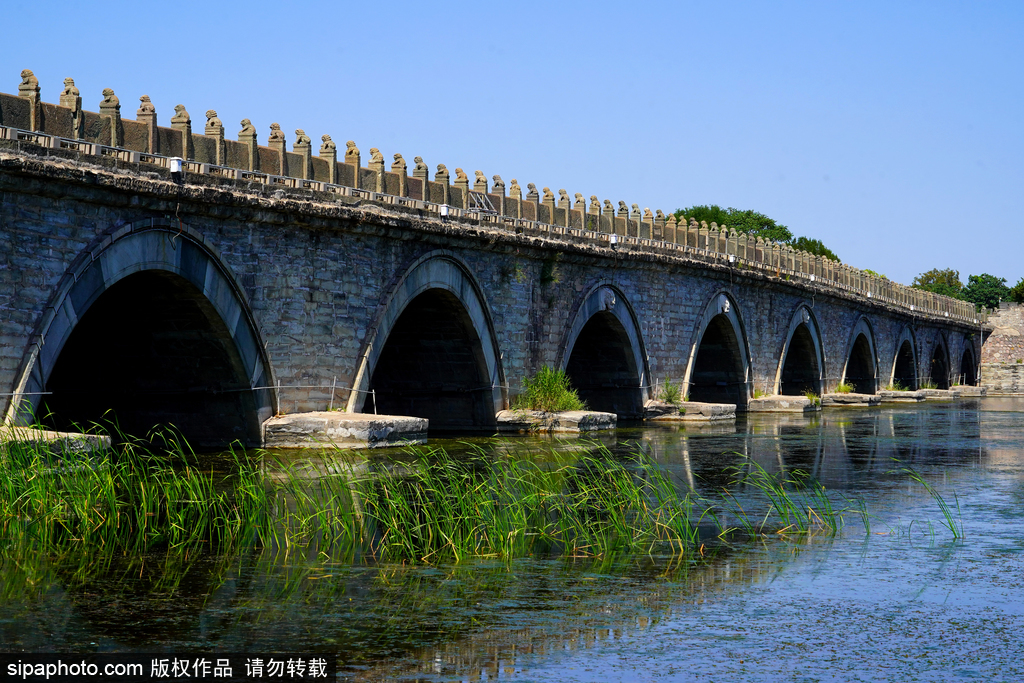
Lugou Bridge has long been an important route to the capital. It is the oldest and longest eleven-arch stone bridge in North China, known worldwide as the "Marco Polo Bridge" and praised as "the best and most unique bridge in the world." It has a history of over 800 years. "Lu Gou Xiao Yue" is one of the famous "Eight Great Views of Beijing". The legends surrounding Lugou Bridge have been included in the fourth batch of the representative list of state-level intangible cultural heritage.

Lugou Bridge is not only a bridge of history, art, and culture, but also a bridge of heroism. On July 7, 1937, the "July 7 Incident" marked the beginning of the nationwide War of Resistance against Japanese Aggression.
Wanping Fortress
Wanping Fortress is located east of Lugou Bridge. It was built in the 13th year of Emperor Chongzhen's reign of the Ming Dynasty (1640) and was originally named Gongbei City. Wanping was one of the counties under the jurisdiction of Shuntian Prefecture in the Ming Dynasty. During the Qing Dynasty, it was renamed Gongji City. On December 1, 1928, the Wanping County Government moved to the original Gongji City, and the city was renamed Wanping Fortress. It is now part of Lugouqiao Town.
Wanping Fortress, located east of Lugou Bridge, was the only passage connecting Beijing to the Inner Mongolia Plateau and the Central Plains to the south. Due to its strategic location, Wanping Fortress became a vital stop for merchants and travelers moving between the north and south. Since the Qing Dynasty, businesses and merchants gradually moved from the western part of the fortress and the banks of the Yongding River into the city, establishing taverns, teahouses, inns, and temples, breaking the former purely military layout. Wanping Fortress is the only fully preserved two-gate garrison city in North China. To protect the capital and defend against Li Zicheng's approach to Beijing, the Ming Dynasty ordered Wu Jun, an eunuch of the Imperial Horse Supervisor, to oversee the construction of the city between 1638 and 1640. The fortress has two gates: the east gate is called "Shunzhi Men(Shunzhi Gate)" and the west gate was originally called "Yongchang Men (Yongchang Gate)" but was renamed "Weiyan Men (Weiyan Gate)" during the Qing Dynasty. The city measures 640 meters in length from east to west and 320 meters in width from north to south, with a total area of about 20 hectares. Wanping Fortress was built during the Chongzhen reign of the Ming Dynasty and is located east of Lugou Bridge.
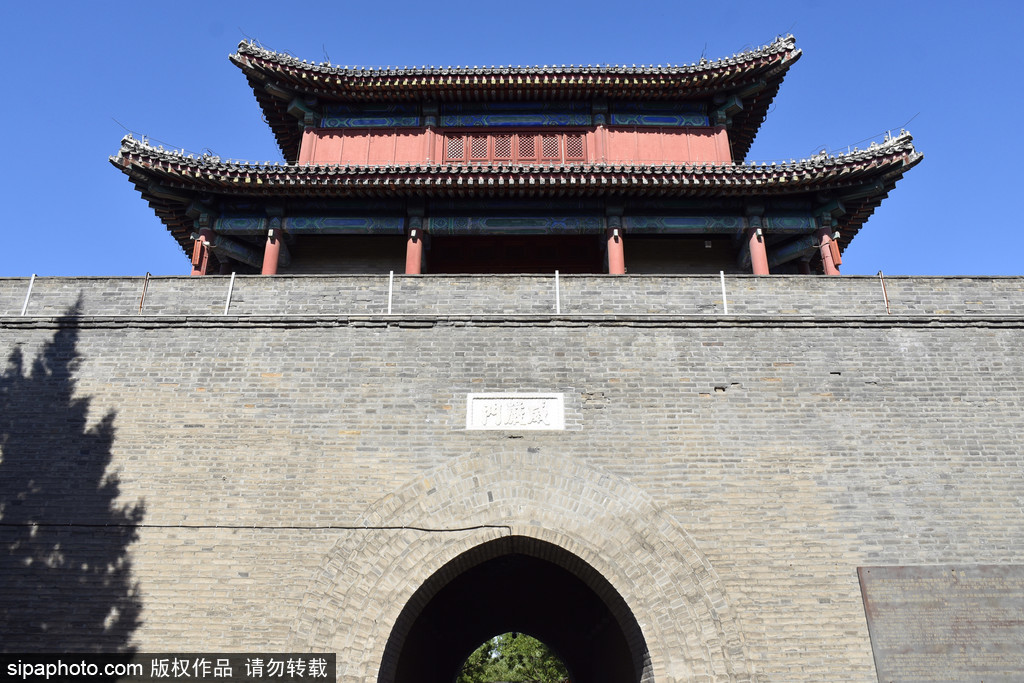
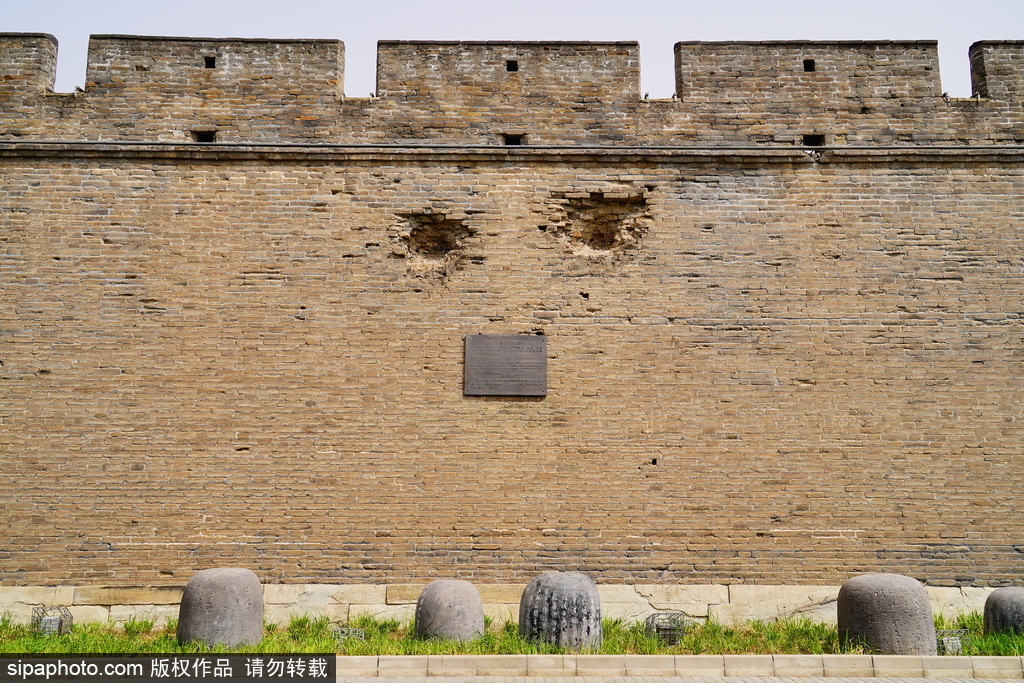
Wanping Fortress is 640 meters long from east to west and 320 meters wide from north to south, with a total area of 208,000 square meters. It was originally named Gongbei City and served as a fortification near the bridgehead, with architecture similar to that of Beijing. The city has two gates, and the outer walls are equipped with crenellations, lookout holes, and shooting apertures below each battlement, with covers for protection. Wanping was one of the counties under the jurisdiction of Shuntian Prefecture in the Ming Dynasty. During the Qing Dynasty, it was renamed Gongji City. On December 1, 1928, the Wanping County Government moved to the original Gongji City, and the city was renamed Wanping Fortress. The July 7 Incident of 1937 broke out here. In 1984, the city walls, gate towers, and the barbican were restored.
Wanping has long been known as the southern gateway to Beijing. The city was built in the 10th year of the Chongzhen reign (1637) during the late Ming Dynasty, a period of warfare, and was constructed to station troops for the defense of the capital.
During the Ming Dynasty, it was called Gongji City, and in the Qing Dynasty, it was renamed Gongbei City. At that time, it was not called Wanping, and the Wanping County Government was located near the Drum Tower in Beijing.
After the Xinhai Revolution, Wanping County was incorporated into Hebei Province. The entire city is 640 meters long from east to west and 320 meters wide from north to south, with a total area of 208,000 square meters.
It was originally named Gongbei City, and the Wanping County Government was near the Drum Tower in Beijing. After the Xinhai Revolution, Wanping County was incorporated into Hebei Province. On December 1, 1928, the Wanping County Government was officially relocated to the original Gongji City near Lugou Bridge, and the city was renamed Wanping Fortress.
Wanping Fortress served as a strategic fortification, with its city walls resembling those of Beijing. The city had two gates, with crenels, watchholes, and shooting apertures below each battlement, with protective covers.
Wanping was originally a county under Shuntian Prefecture during the Ming Dynasty, and the county government relocated here nine years before the July 7th Incident erupted.
Built for military purposes, the city's structure was different from that of a typical county town. Its internal layout lacked the streets, alleys, markets, and bell and drum towers found in regular county towns.
The city had only two gates, to the east and west, both equipped with barbicans and gate towers. The thick and solid walls were primarily designed for the defense of the capital.