
July 27th witnessed the successful inclusion of the Beijing Central Axis into UNESCO world heritage list. So, what heritage sites are encompassed in the Beijing Central Axis, and are you familiar with the scenic spots nearby?
Bell and Drum Towers
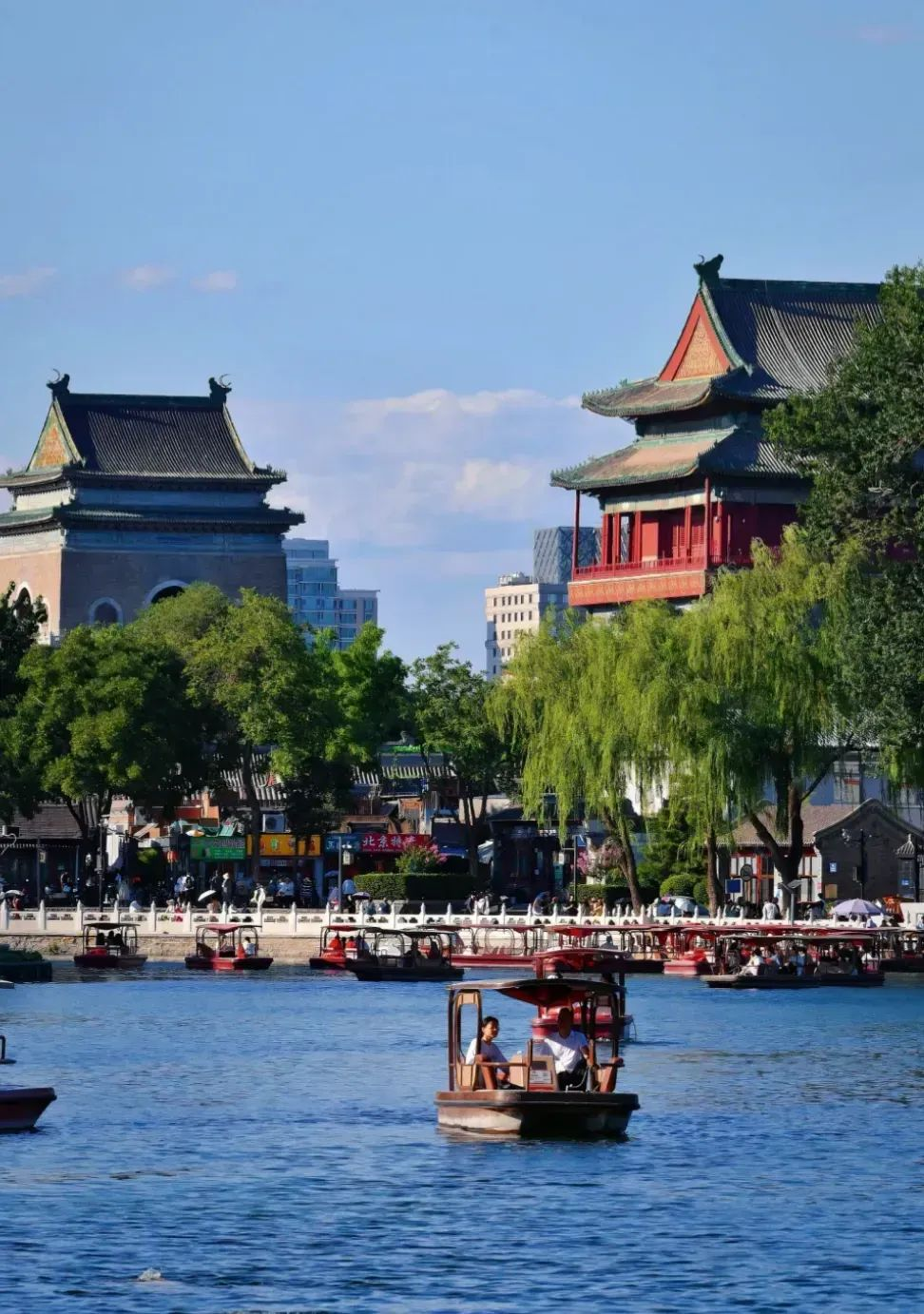
Boasting the largest scale and highest shape in the history of urban bell and drum tower construction, the Bell and Drum Towers at the north end of the Beijing Central Axis served as the time telling center of the city in the Yuan, Ming and Qing dynasties.
Beijingers are accustomed to seeking their leisure time on the Bell and Drum Tower Square located between the Drum Tower and Bell Tower. Having become a comprehensive site integrating culture, art and tourism, this area enables tourists outside Beijing to get a glimpse of the rich history of this city.
Neighboring Attraction: Hong'en Taoist Temple
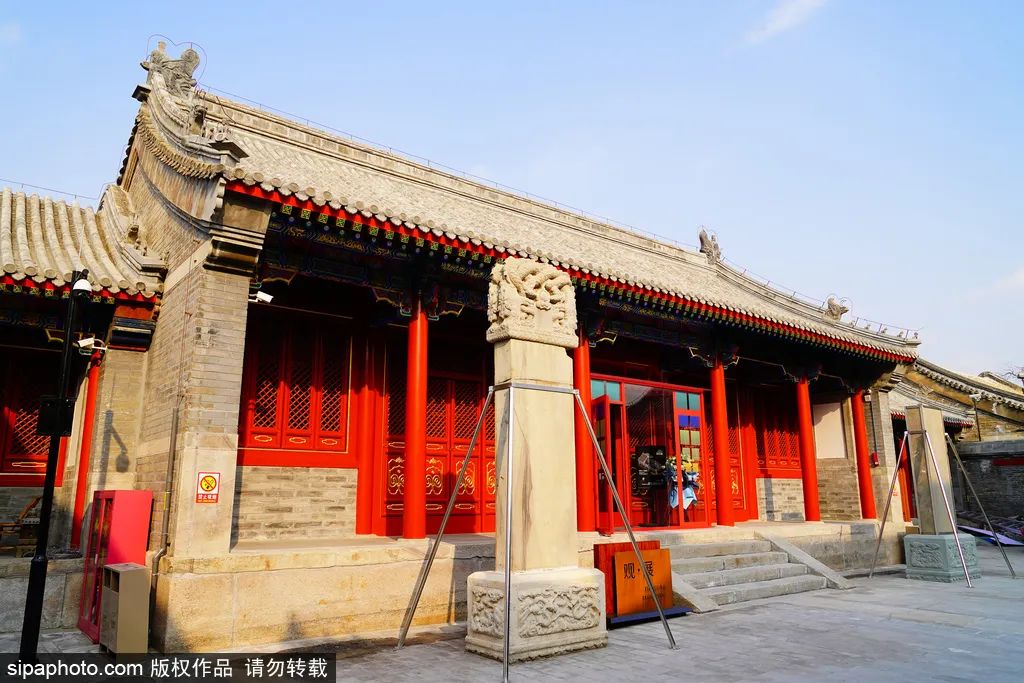
This year, the over 700-year-old Hong'en Taoist Temple at the north end of the Beijing Central Axis has been opened to public.
Located to the north of the Bell and Drum Towers, Hong'en Taoist Temple is known as the "key of the dragon's tail" on the Beijing Central Axis and has undergone many functional evolutions. Today, through protective restoration and activated utilization, it has become a civic cultural space constituting digital art exhibition, historical exhibition of Hong'en Taoist Temple, Central Axis theme post office, bookstores, cultural and creative shops, etc.
Wanning Bridge
At the intersection of the Beijing Central Axis and the Beijing-Hangzhou Grand Canal exists the Wanning Bridge, which can date back to the Yuan Dynasty. Known as "the first bridge on of the Central Axis", it is the earliest existing ancient bridge in the Beijing section of the Grand Canal.
Having gone through restoration and preservation for many times, it's now glowing with new vigor and vitality.
Neighboring Attraction: Prince Kung's Palace Museum
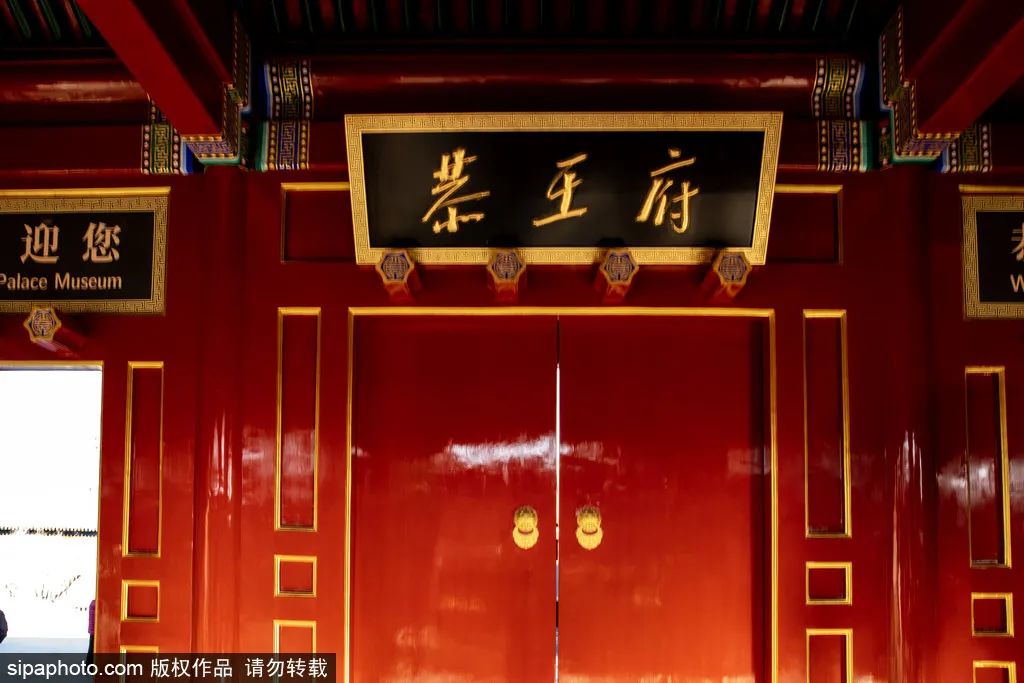
Established on the ruins of the former Prince Kung's Palace, the museum puts the research, display and spread of the historical culture of the Palace at its core, and was awarded a national first-class museum in 2017. As the most well-preserved and the only royal palace complex of Qing Dynasty open to the public, it bore witness to the entire historical process of the Qing dynasty from prosperity to decline, which brings it the reputation as "a mansion that tells half of the Qing Dynasty history".
There are many attractions in the Museum, such as the Grand Theatre, the Fu-character Stele, the Western-style Gate, the Rear Building, Yin'an Hall, Jiale Hall, Baoguang Chamber, Xijin Studio and so on, so don't hesitate to have a wonderful view of them.
At present, the "Tile Masonry Craftsmanship in the Construction of Traditional Chinese Official-style Architecture – Linqing Tribute Brick Manufacturing Techniques" exhibit is on display in the Jiale Hall.
Jingshan Park

During the Yongle period of the Ming Dynasty, in order to build the city of Beijing, the earth from the demolition of the old imperial city and the excavation of the Tongzi River of the new Forbidden City was piled here, forming the original "Long Live Mountain". In the Qing Dynasty, the mountain was renamed "Jingshan", which is still in use today. Nowadays, Jingshan Park has become an important destination for leisure and entertainment. When standing on Wanchun Pavilion, the highest point of Jingshan Park, Wanchun Pavilion, you can immerse yourself in the charm of the Beijing Central Axis and the unique magnificence and order of Beijing.
Neighboring Attraction: Beihai Park
Located in central Beijing, Beihai Park is currently the earliest and best-preserved classical royal garden with the most profound culture in China.
On the east bank exist Haopu Greek (Haopujian) Garden, Painted Boat (Huafang) Studio, Xian Can Altar and several other courtyard-style gardens within garden. Hidden behind pines and cypresses, they combine both natural aesthetic and the charm of the private gardens in the Jiangnan area. On the north shore, the Quiet Heart (Jingxin) Studio, West Vatican (Xitianfanjing), Chengguan Hall, Kowloon Wall, Chanfu Temple and Extreme Happiness in Xiaoxitian line up from east to west, with the Five-dragon Pavilions dotting along the lake and subtly integrating into the natural landscape. All of these contribute to a landscape painting free of any artificial traces.
The other day, "Paragon of Beijing School: Exhibition of the Selected Artworks of Mr. Qigong's Paintings" made its debut in Painted Boat (Huafang) Studio. The painter and calligrapher Mr. Qigong's paintings, totaling 48 pieces of originals, are exhibited singly for the first time,
The Forbidden City
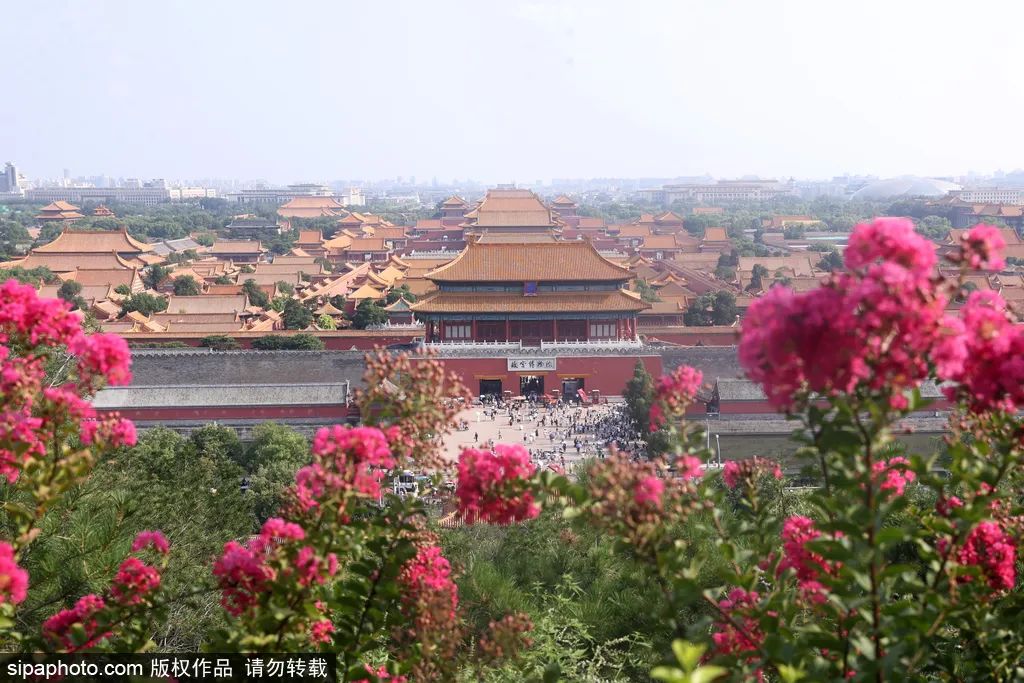
Covering an area of about 720,000 square meters, the Forbidden City is one of the largest and most intact ancient wooden architectural complex in the world. It is not only a treasure of ancient Chinese architectural art, but also a symbol of the time-honored history and culture of China. With the Central Axis as its center as well as an elaborately-arranged symmetrical and hierarchical layout, it fully displays the symmetrical beauty and sense of order in ancient Chinese architecture.
Neighboring attraction: Nanchizi Art Museum
Adjacent to the Donghuamen Gate of the Forbidden City, Nanchizi Art Museum covers an area of about 1,500 square meters, with a Suzhou-style garden as its main building. It is not only a paradigm of the architectural characteristics of traditional Chinese aesthetics, but also an art space that lives up to international exhibition standards.
The small and exquisite courtyard of Nanchizi Art Museum fully embodies the quintessence of Suzhou gardens. In the center of the courtyard lies a pool of clear water embellished by grasses, trees and Taihu stones, with pavilions and corridors in traditional Chinese style surrounding it. A leisurely stroll by the pool will definitely immerse you in a picturesque ambience. At present, the "Heavenly Enlightenment - Xia Hang Sculpture Exhibition" is on display.
A friendly reminder: Nanchizi Art Museum will be closed all day on July 29 (Monday), 2024. In order to provide visitors with a better experience, the museum will be closed for maintenance from July 30 (Tuesday) to August 2 (Friday).
Duanmen (Gate of Uprightness)
In Ming and Qing dynasties, Duanmen was utilized for preserving the emperor's ceremonial supplies as well as readjusting the honor guards. The court rooms on both sides of Duanmen were arranged for the officials to rest and wait before going to the court. As part of the imperial court, Duanmen constituted the leading ceremonial architectural sequence both in and out of the palace in the Ming and Qing Dynasties.
Neighboring attraction: Huang Shi Cheng
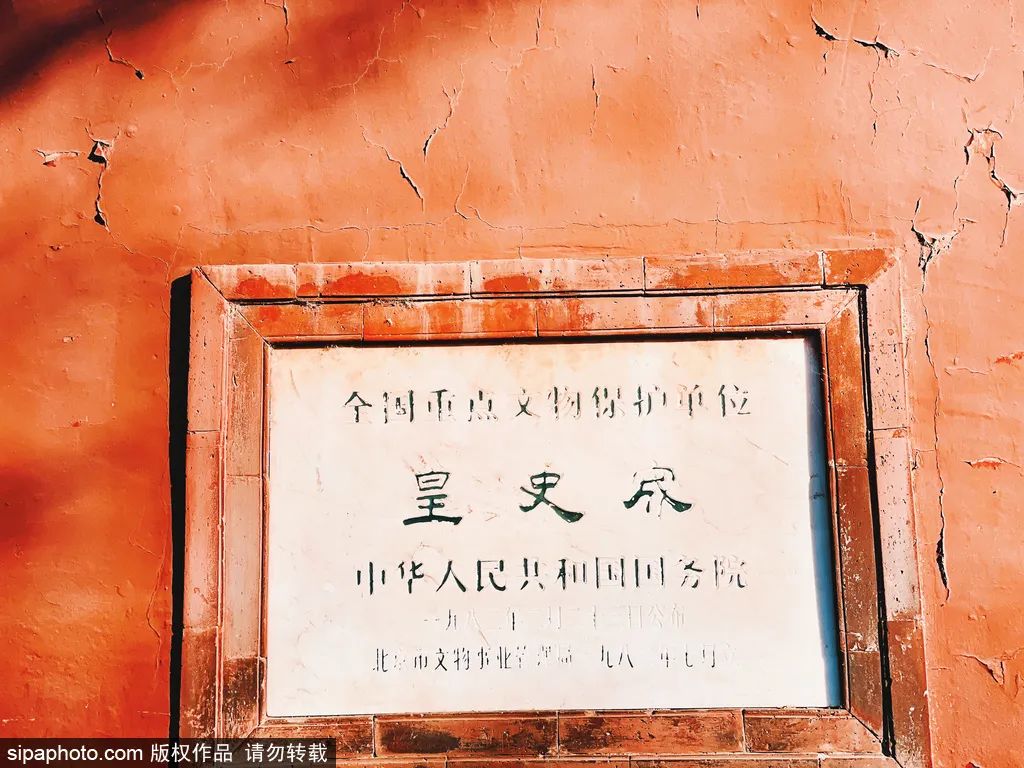
Huang Shi Cheng (Cheng (宬) refers to an ancient repository for books) was used during the Ming and Qing dynasties to preserve royal archives. It is not only the best-preserved ancient imperial archive in China, but also an indispensable contributor to the successful inclusion of the Beijing Central Axis into UNESCO world heritage list
Known as a "stone hall", the library was built by carved stone, with neither pillars to support nor nails stuck in the hall. There are 1.42-meter-tall stone bases on the ground, on which there are "gold cases" to preserve the files, namely wooden cases wrapped by bronze skin and adorned by dragon patterns. The specifications of each gold case are 1.35 meters in length, 0.75 meters in width and 1.3 meters in height. Apart from the 32 gold cases currently stored in Huang Shi Cheng, it is introduced that another 120 golden cases have been moved into the new hall of the First Historical Archives of China and carefully preserved as precious cultural relics.
As an indispensable part of the culture of Beijing Central Axis, Huang Shi Cheng has attracted a growing number of visitors to walk in and trace the precious memories hidden in the time-honored historical culture.
Tian'anmen Gate
Tian'anmen was the main entrance to the imperial city in the Ming and Qing dynasties. As a key component on the Central Axis, it is situated in the heart of Beijing, with the Outer Jinshui River encircling it to the south and the Tian'anmen Square in its front. It's the shared wish of many Chinese people to pay a visit to Beijing and take a picture in front of Tian'anmen.
Neighboring attraction: Imperial City Wall Relics
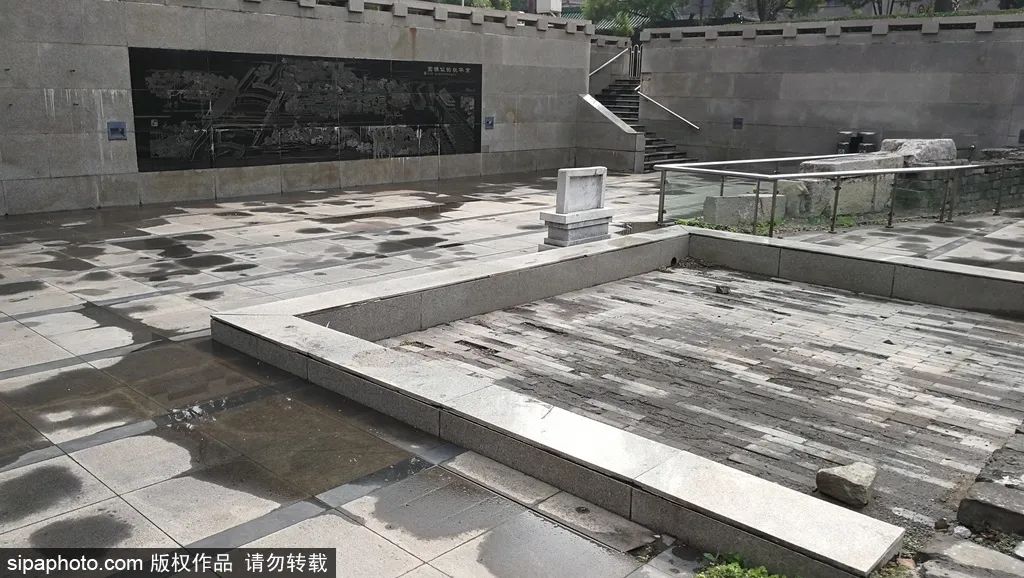
Located on the east and west sides of Tian'anmen, the Imperial City Wall Relics are the remnants of the city walls of the Imperial City of Beijing during the Ming and Qing dynasties. The interior space is mainly taken up by eunuch institutions serving the royal family, such as various directorates, bureaus, workshops, warehouses and so on.
To the due south of the Ming Imperial City Wall built between the 5th year to the 18th year of the Yongle Era (1407-1420) was the Daming Gate (renamed Daqing Gate in the early Qing Dynasty), inside which there is a T-shaped square. Chang'an Left Gate and Chang'an Right Gate were set at the east and west ends of the north side of the square. To the further north is Chengtianmen Gate, the main gate of the Imperial City. And the east, west and north gates were named as Dong'anmen Gate, Xi'anmen Gate and Bei'anmen Gate. During the Shunzhi Era of the Qing dynasty, Chengtianmen Gate was renamed Tian'anmen Gate, while Bei'anmen Gate was renamed Di'anmen Gate. The Imperial City was rebuilt during the Qianlong Period of the Qing Dynasty, with additional walls constructed outside Chang'an Left Gate and Chang'an Right Gate, and an extra gate set at each end, which are known as the East Chang'anmen Gate and the West Chang'anmen Gate. Most of the walls of the Imperial City were dismantled by the Ministry of Internal Affairs of the Beiyang Government in 1926 and 1927. Following the aesthetics of traditional architectural design, the 6-meter-high wall of the Imperial City is mostly made of large bricks, with a 2-meter-thick wall base and a 1.73-meter-thick top. The top is covered by ice plate eaves with yellow glazed tiles as their top layers. While the about 900-meter-long Imperial City Wall on the east and west sides of Tian'anmen remains intact after maintenance, the north, east and west walls of the Imperial City were demolished in 1926 and 1952, with only their names left.
In 2001, the government of Dongcheng District relocated the residents of Donghuangchenggen (Root of the East Imperial City) and built a banded public green space here. Through archaeological excavation, the exact location of Donghuangcheng Wall and Dong'anmen Gate was found. A section of the wall of about 25 meters long was restored in the northern section, and two sunken exhibition areas were built to display part of the Dong'anmen ruins. With a history of more than 500 years, the Imperial wall is the witness and important basis of the vicissitudes of the imperial city.
Outer Jinshui Bridges
Jinshui Bridges are divided into Inner Jinshui Bridges and Outer Jinshui Bridges. The Inner Jinshui Bridges are situated in front of the Taihe Gate in the Forbidden City, while the Outer Jinshui Bridges lie on the Outer Jinshui River on the south side of Tian'anmen Square. The Outer Jinshui Bridges will offer you a close view of the Tian'anmen Gatetower, which is very magnificent and breathtaking.
Neighboring Attraction- Beijing Ancient Observatory
The world-renowned Beijing Ancient Observatory used to be the royal observatory of the Ming and Qing Dynasties, and is currently subordinate to the Beijing Planetarium. With well-preserved buildings and courtyards as well as a complete set of instruments, the time-honored observatory served as an important site for the exchange of Chinese and Western cultures in the late Ming and early Qing dynasties.
Currently, there are large copper instruments on display on the south, west and north sides of the platform, including eight ancient astronomy instruments invented in the Qing dynasty, namely the Celestial Globe, Equatorial Armilla, Ecliptic Armilla, Azimuth Theodolite, Quadrant, Sextant, Jiheng Armillary Sphere and Altazimuth, All of them are confirmed national first-grade cultural relics and China's national treasures of astronomy. Don't hesitate to bring your kids there for an educational visit during summer vacation.
Taimiao (Imperial Ancestral Temple) and Shejitan (Altar of Land and Grain)
Taimiao and Shejitan are two main buildings located symmetrically along Beijing's Central Axis. Taimiao is now known as "Beijing Working People's Cultural Palace". Shejitan, situated opposite Taimiao, is located within Zhongshan Park.
Neighboring attraction: Zhongshan Park
Spanning 23.8 hectares, Zhongshan Park is a classical altar and temple garden with a monumental purpose. It features several famous attractions including a giant cypress tree dating back to the Liao Dynasty, Zhongshan Hall, the Peace Defense Plaque, Lanting Tablet Pavilion, the Aphorism Pavilion, Huifang Garden, Tanghua Dock and so on .
If you feel like drinking a cup of tea, don't miss Laijin Yuxuan Teahouse, the centennial teahouse on the west side of Zhongshan Park. In its earlier years, it was frequented by a regular visitor, Mr. Lu Xun.
According to Lu Xun's Diary, among Mr. Lu Xun's 82-time visits to Zhongshan Park, 60 of them were accompanied by his staying in Laijin Yuxuan Teahouse, where he used to translate and write, drink tea, have meals, appreciate flowers and meet friends. If you enjoy watching shows, then Zhongshan Park Music Hall is definitely worth a visit!
Tian'anmen Square and Its Architectural Complex
Tian'anmen Square and its architectural complex are situated at the core of the Central Axis. The prominent structures comprise two memorial buildings, namely the Monument to the People's Heroes and the Chairman Mao Memorial Hall, and two public buildings, which are the National Museum of China and the Great Hall of the People.
Neighboring attraction: China Numismatic Museum (CNM)
China Numismatic Museum is a national numismatic museum directly subordinate to the People's Bank of China. It has two buildings under national-level protection, the former Commercial Guarantee Bank of China and Central Bank of China Peking Branch, both of which bore witness to the development of the modern financial industry of China.
A permanent exhibition, "The Exhibition of the Chinese Currency History", and a special exhibition named "The Special Exhibition Commemorating the Millennium of the Birth of Paper Currency" are currently accessible in the museum. The former offers a comprehensive and systematic insight into the history of China's monetary development over the past thousands of years, following a chronological order and supported by a rich collection of more than 2,000 pieces of monetary objects and the comprehensive utilization of multimedia means. To highlight the great role of paper money in promoting human civilization, the latter focuses on paper money as an important invention and exhibits more than 200 pieces of precious objects, such as banknote plates of the Jin Dynasty as well as banknotes dating back to the Yuan, Ming and Qing dynasties on the occasion of the millennium of the birth of paper money,
Zhengyangmen Gate
Located at the south end of Tian'anmen Square, Zhengyangmen Gate is the most prominent and magnificently constructed gate among the nine main gates of Beijing's inner city during the Ming and Qing dynasties, with the reputation as the "Head of the Nine Gates".
Comprising an archery Tower and a watchtower, it is an iconic structure of Beijing's old city walls. Today, Zhengyangmen Gate is open to the public as a museum.
Neighboring Attraction - China Railway Museum (Zhengyangmen Gate)
The China Railway Museum (Zhengyangmen Gate), located on the southeast side of Tian'anmen Square, was rebuilt from the Zhengyangmen East Station of the Beijing-Fengtian Railway. Built in 1903, completed and opened in 1906, the station has gone through more than 100 years of ups and downs. As an important gateway into and out of Beijing at that time, it was endowed with an abundance of historical and cultural heritage, recording and witnessing lots of historical events in the modern history of China.
China Railway Museum (Zhengyangmen Gate) features a permanent exhibition on the "History of the Development of China's Railways", narrating the advancement of China's railways from making a staggering start, struggling to survive, to striving to be strong and striding forward in the new era. Utilizing a wealth of detailed historical photographs, physical exhibits, and advanced exhibition techniques and methods, the exhibition highlights the 140-year-long history of the evolution of China's railways, providing a palace for an in-depth understanding of China's railway history, culture and scientific and technological development.
Southern Section Road Archeological Sites
The road remains in the southern section of the Central Axis were the essential path for national ceremonial activities in the Ming and Qing dynasties. They comprise the stone road remains on the north side of Yongdingmen Gate, the road remains on Yongdingmen Neidajie (St), and the drainage ditch site on the Nanzhongzhou Lu (Rd) of Zhushikou.
Neighboring Attraction: Yongdingmen Park
As a key element of the "Cross Sightseeing Spots", Yongdingmen Park is called "Longmai" "Tianjie" (The Street of Heaven). It stretches from Nanwei Road in the north to Yongdingmen Square in the south, with a span totaling 1240 meters. Besides, it is flanked by the Temple of Heaven and the Altar of the God of Agriculture in the east-west direction, the maximum width reaching 285 meters. The whole park is divided by the Central Axis into the east section and the west section.
The green space of Yongdingmen Park totals 67,000 square meters, with a number of landscape axis formed in the interior, among which the Beijing Central Axis is simultaneously its main axis. Both sides of the straight road are lined with tall Chinese scholartrees. On the open green space behind trees on both sides are ginkgo arrays, evergreen trees and abundant flowers and shrubs, supplemented by landscape lighting facilities to highlight the artistic conception of the axis. When looking through the trees to both sides, you can see the two altar walls. Standing on the south axis, Yongdingmen Park perfectly echoes the north axis. It not only sets off the historical and cultural atmosphere, highlights the two altar cultures, and reflects the style of the ancient capital, but also combines leisurely functions with distinct characteristics of the era and contributes to a complete axis landscape.
Temple of Heaven
Located in the southeast of the outer city of the old city of Beijing and on the east side of the Central Axis, the Temple of Heaven forms an east-west symmetry with the Altar of the God of Agriculture in location and pattern. It is the largest and best-preserved ancient worship complex in China, whose architectural design and construction fully display the world view of ancient Chinese. As a masterpiece among China's ancient imperial worship buildings, it embodies the worship rites and cultural traditions of the two dynasties.
Neighboring Attraction: National Natural History Museum of China
National Natural History Museum of China is located on the east side of the southern section of Beijing's Central Axis, adjacent to the Temple of Heaven, the world-known heritage site.
The museum is China's only national-level comprehensive natural history museum, which serves to preserve, study, collect, elucidate and display natural objects and natural heritage of historical, scientific and artistic value in the advancement of human society. While its primary exhibition sticks to the clue of biological evolution, there are permanent exhibitions on ancient reptiles, ancient mammals, invertebrates, and the wonderful animals of Africa. All of them have vividly demonstrated biodiversity and its relationship to the environment, thus forming a panoramic picture that showcases the evolution of creatures on the earth. It's a wonderful place where you can have a good time with your kids.
Altar of the God of Agriculture
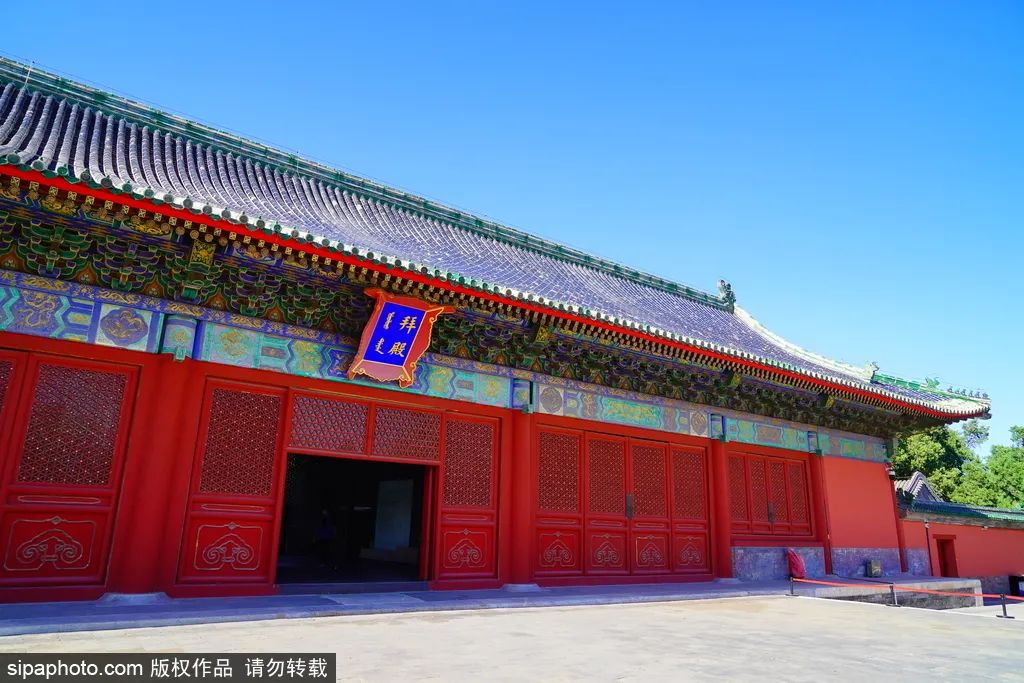
As the largest existing royal place of worship to the God of Agriculture in ancient China, Altar of the God of Agriculture demonstrates the respect for the culture of farming prevalent in traditional Chinese society, and carries the ceremonial traditions of the Ming and Qing dynasties to worship the God of Agriculture.
Neighboring Attraction: Beijing Ancient Architecture Museum
Located inside the Altar of the God of Agriculture, Beijing Ancient Architecture Museum takes Caisson (Zaojin) of Beijing Longfu Temple as the key highlight of its collections. its the Tiangong caisson of Zhengjue Hall of Longfu Temple. The caisson is divided into six layers, with the circular main frame of each frame carved delicate cloud patterns. The top of the caisson is a stellar map of 1427 stars.
This year witnesses the "first warehouse under heaven" Shencang opened to the public. It is the first time that the secrets of the complex have been unveiled to the public in more than 200 years, and many tourists are allured to pay a visit to it.
Yongdingmen Gate
Located at the southern end of the Central Axis, Yongdingmen Gate is a significant scenic spot along the southern section of the axis. Among the many gates of the outer Beijing City, Yongding Gate boasts the largest shape and the most exquisite craft. It was first known as "Zhengyang Outer Gate", and officially named Yongdingmen Gate in the Ming Dynasty with the meaning of "eternal stability".
From the gate's watchtower, you can look northward and see the 7.8-kilometer Central Axis extending along the imperial route, with Zhengyangmen Gate's watchtower visible in the distance.
Neighboring attraction: Capital Grain Museum
Do you know how the grains come into being? Do you know what are the uses for ancient grain processing tools such as winnowers and stone mills? Are you curious about what the old grain shops and pubs in Beijing during the Ming and Qing dynasties looked like? As the only grain museum in Beijing, Capital Grain Museum provides you with the answers to all the questions about grains.
The museum introduces knowledge about the origin, cultivation, storage, processing, and supply of grains through real objects, photographs, miniature models, recreated scenes, and more, supplemented by transparent screens, touch screens, projections and other advanced display technologies.
While urban citizens have few opportunities to personally experience and learn about agricultural, a visit paid to the Capital Grain Museum allows them to supplement the missing knowledge as well as appreciate the hard-won food at the table.
Why not take your time to explore the landmarks of the Beijing Central Axis together with your friends!


