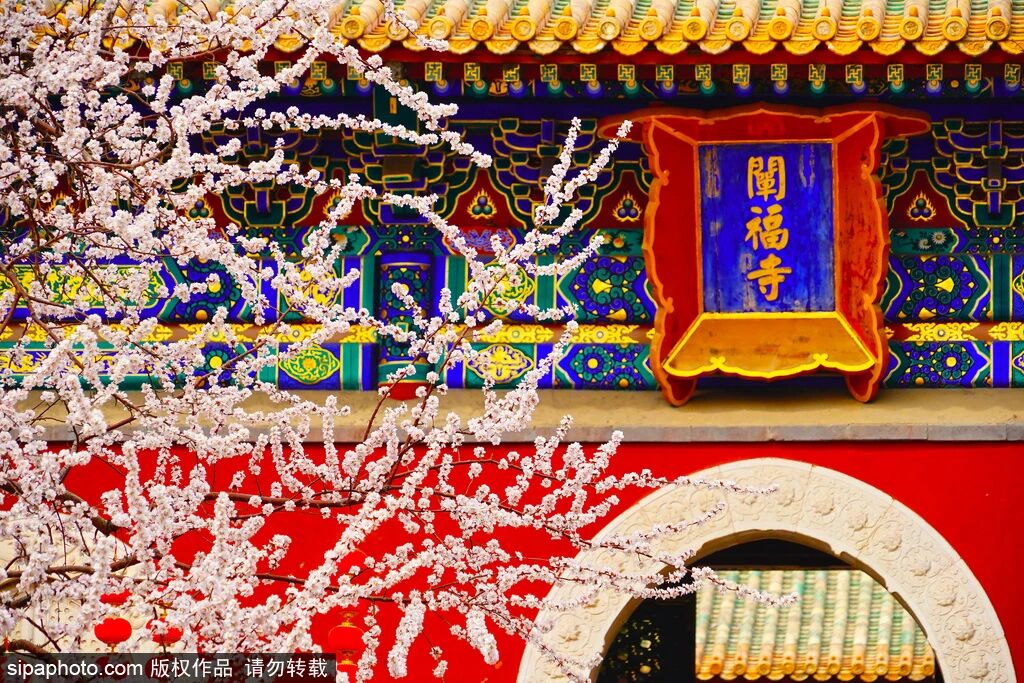
The renovation of Jingfu Pavilion in the Summer Palace is completed, adhering to the principle of minimal intervention. The restoration includes floors, walls, and wooden components. The purpose is to preserve and continue its historical value. Tourists can now experience the traditional crafts and learn about the raw materials used. Jingfu Pavilion witnessed important historical moments, including negotiations for the peaceful takeover of Peiping in 1949. The completion of the renovation marks an upgrade to the red tourist area of the Summer Palace.

Jingfu Pavilion is the composition center of the eastern part of Wanshou Mountain. From Jingfu Pavilion to the south, it is exactly on the same line as the Grand Theater Building of Dehe Garden and Wenchang Pavilion on the East Causeway, forming a main axis of the eastern buildings of the Summer Palace. Because Jingfu Pavilion is close to Cixi's residence, Leshou Hall, Cixi often watched the rain and the moon in Jingfu Pavilion, received foreign envoys, and sometimes entertained the families of foreign envoys here. According to historical records, Cixi worshiped the Cowherd and the Weaver Girl in Jingfu Pavilion on the seventh day of July every year, admired the moon in Jingfu Pavilion during the Mid-Autumn Festival in August, and climbed high in Jingfu Pavilion during the Double Ninth Festival in September to eat Fu (pheasant), Lu (venison), and Shou (mutton), Xi (Guandong sturgeon). In the summer, Cixi and her concubines and maids bet here and push Pai Gow, which is called "Guo Yin Tian Er".
In January 1949, Ye Jianying, then director of the Peking Municipal Military Control Commission and mayor of Peking, followed the instructions of the Central Committee of the Communist Party of China and the Central Military Commission to "strive to solve problems through peaceful means" and went through three difficult negotiations with Fu Zuoyi, a Kuomintang soldier who was guarding Peiping alone, and finally signed the "Agreement on the Peaceful Settlement of the Peking Issue."
On January 29, 1949, representatives of the People's Liberation Army and Fu Zuoyi held the first meeting in Jingfu Pavilion to discuss the peaceful takeover of Peiping. Since then, from the takeover of city defense to the reorganization of the old army, from the maintenance of security to urban construction, various matters for the takeover of Peiping have been determined one by one. Jingfu Pavilion witnessed the Chinese Communists' protection of people's lives and property and the protection of cultural relics and historic sites in Peiping. It also witnessed the historical moment when the ancient capital returned to the hands of the people.
The negotiation table used by the two sides when they met at Jingfu Pavilion was on display as a precious historical witness in the "Spring Dawn in the Ancient Capital - The Central Committee of the Communist Party of China's 'Road to Beijing for Examination' Summer Palace Special Exhibition", using cultural relics as a carrier to tell the story of that period.