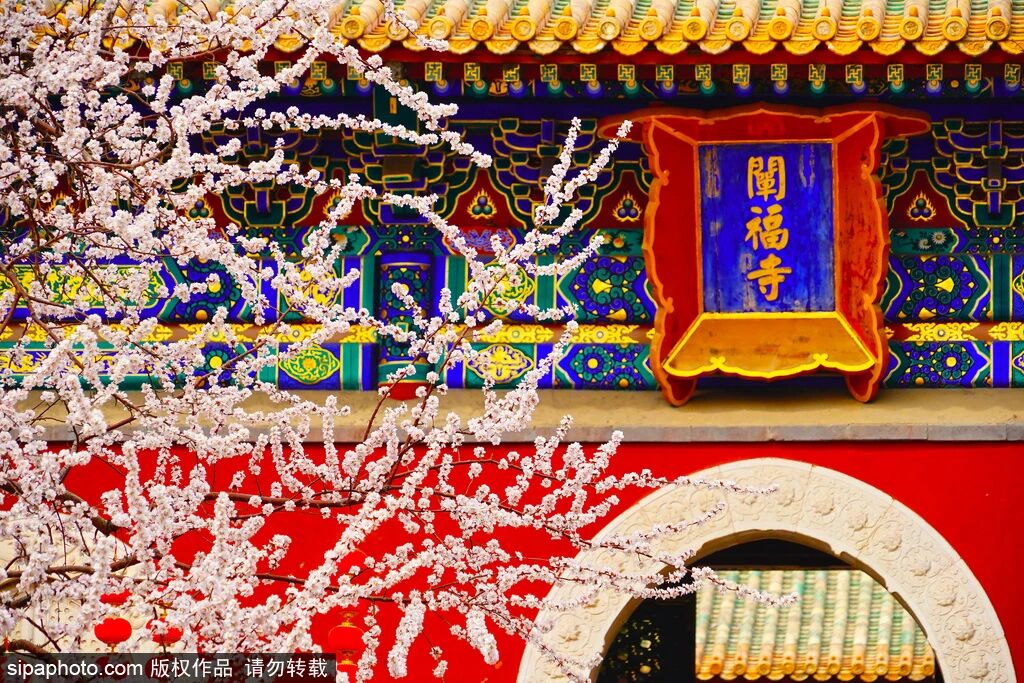
Adjacent to the central axis, the Imperial City Wall Relics Park is a cultural landmark of Beijing and a popular destination for leisurely walks among citizens. Recently, the park has completed renovations and upgrades and enhancing the "beauty" of the seven original scenic spots. The park is surrounded by green plants and fragrant flowers, making the red walls even more solemn and beautiful. The courtyard lighting has been renewed, and new signs provide cultural and historical landmark orientation information, connecting four cultural exploration routes.

The Imperial City Wall Relics Park has added signs to indicate the orientation information of key landmarks on the themed cultural exploration routes for tourists.

In the early morning, many citizens come to the Imperial City Wall Relics Park for leisure and fitness. On the north side of the park, the restored red walls are no longer mottled, and the wall color is bright and eye-catching. On the square, the granite ground has been newly paved, and the elderly chat and walk while children play and laugh. Walking further south, under the trees in the park, shade-tolerant plants have been newly planted. Along the way, there are also eye-catching signs such as the Red Building of Peking University and the former site of the Sino-French University, guiding people to enter historical sites and learn about Beijing's culture.

The Imperial City Wall Relics Park is located in Jingshan Street, Dongcheng District, on the east side of the central axis, only 400 meters away from the Forbidden City. It is about 2.3 kilometers long and 30 meters wide, and was built in 2001. After more than 20 years of wind and sun, the ground is uneven, the walls are mottled, the vegetation has decreased, and the lighting is damaged. There are many areas in the park that need to be renovated and upgraded.
A survey questionnaire on the park renovation shows that about 53% of the surrounding residents come to the park almost every day for a walk. Greening, adding space for elderly and children's activities, and night lighting are the top three aspects that residents hope to improve. Based on the requirements for the protection and renewal of the Imperial City and Forbidden City area, and in response to the expectations of citizens, relevant departments of Dongcheng District have launched renovations and upgrades for the park.
The first step is to enrich the quantity and variety of flowers, plants, and trees. The park has planted more than 44,000 shrubs and 78 species of trees and plants. There are not only flowering trees such as pink peach and magnolia, but also shade-tolerant shrubs and green hedges. Under the tall trees, beautiful flowers and plants have been added according to different lighting conditions, like a ribbon surrounding the lawn.

The Imperial City Wall Relics Park is located on the site of the "East Imperial City Wall" of Ming and Qing Dynasty Beijing. The park and its surroundings are home to rich historical relics. From north to south, the park connects historical buildings such as the former site of the Sino-French University, the former residence of Lao She, and the European and American Students Association. At the southern end, there is also the site of the Dong'anmen of the Ming Imperial City. In order to highlight these key landmarks, the park was initially built with seven scenic spots.
Walking south along the trail, the renovated leisure walking system also makes people feel comfortable and safe. The main road is made of granite, making it easy and light to walk on, while the small path uses permeable bricks, which are convenient and practical. Every 15 meters, a quaint courtyard lamp and scattered ground lamps have been added to provide safety for night-time park visitors.

In addition, the park has added unified signage, linking the Nanluogu Xiang on the north side, the core area of Wangfujing on the south side, the Forbidden City and Jingshan on the west side, and the Red Building of Peking University. The signage provides detailed map and navigation information for visitors, making it easier for people to reach their destination quickly.