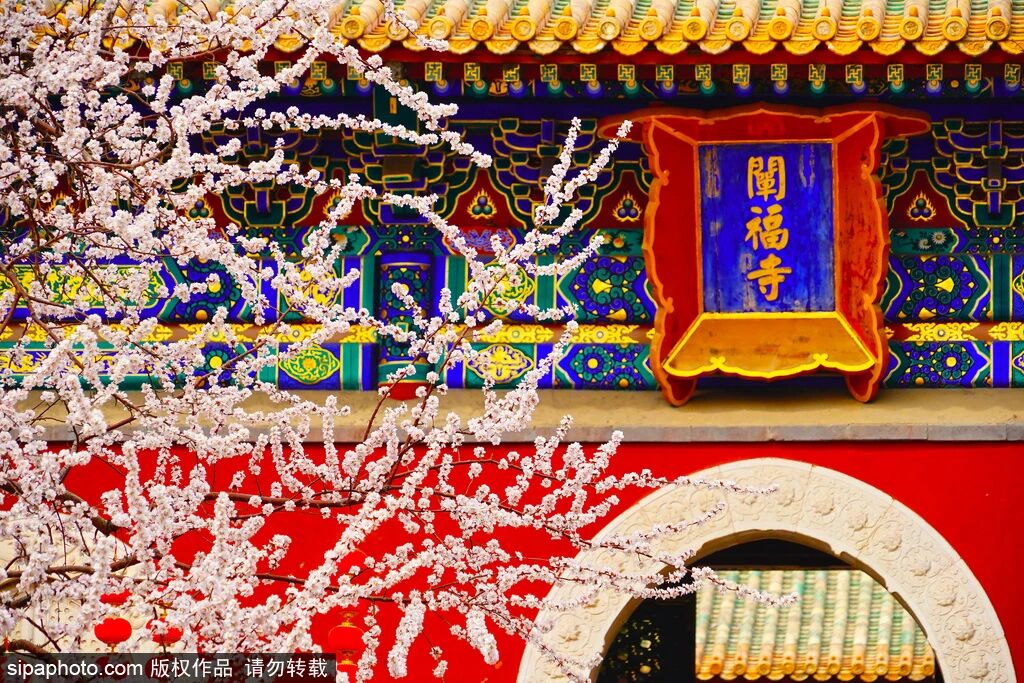
Beijing Cultural Exchange Museum (Zhihua Temple)

Founded by Wang Zhen in 1444 AD, the eunuch of the Ming Dynasty, Zhihua Temple has become a comprehensive museum to promote cultural development, study cultural relics, carry out folk collection displays, and hold cultural exchange activities.
On January 13, the Beijing Cultural Exchange Museum (Zhihua Temple), which has been closed for more than a year, reopened and visitors who enter the museum can enjoy the beauty of the ancient buildings and the unique charm of Beijing music.

At present, Zhihua Temple still has four courtyards, which is the most complete preserved Ming Dynasty wooden structure complex in Beijing, and was identified as the first batch of key cultural relics protection units in China in 1961. The black glazed tile paved roof makes the temple look solemn and magnificent. The four walls of the Rulai Hall are decorated with more than 9,000 small Buddha niches, which are extremely exquisite; Inside the temple is one of the oldest surviving "Runner Tibet" in Beijing.

Zhihua Temple Beijing music, known as "China's living fossils", is particularly famous and is one of the first intangible cultural heritage in China, with a history of more than 560 years. Zhihua Temple Beijing music comes from the palace court, inherited by Zhihua Temple, and integrates court music, Buddhist music, and folk music. The music of Zhihua Temple is ethereal and mysterious, simple and elegant, and still retains the legacy of the Tang and Song dynasties. Visitors coming to Zhihua Temple can enjoy the Beijing music performance at 10 a.m. and 3 p.m.
Address: No. 5, Lumicang Hutong, Dongcheng District, Beijing
Translator: BAO Minmin
Reviewer: TANG Yingqi