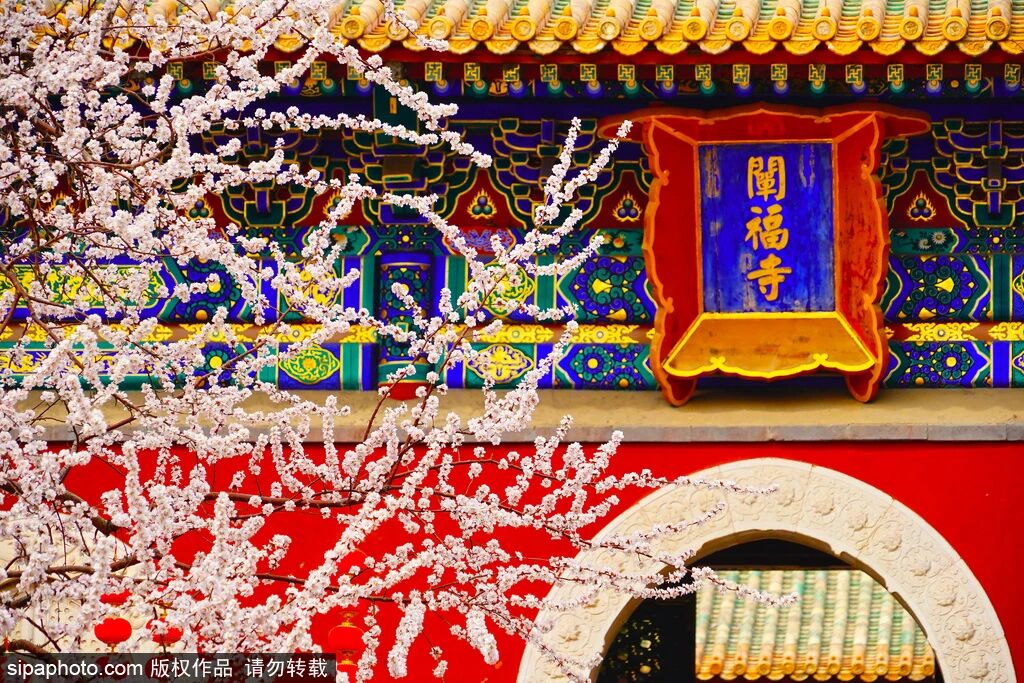
Begonia
Hall of Literary Brilliance, Garden of Compassion and Tranquility, and Palace of Tranquil Longevity
Flowering period: early-to-mid April

Among the begonia in the Palace Museum, the number of begonias in front of the Hall of Literary Brilliance is the largest. This begonia was planted in the late Qing Dynasty and has a history of nearly 120 years.
In April, come to the Hall of Literary Brilliance. The begonia trees on both sides of the paved path in front of the hall are blooming and leafy. These two rows of begonias are very tall. When spring is coming, a cluster of begonia flowers hangs on the slender branches, and from a distance, it looks like two pale pink clouds, floating outside the Hall of Literary Brilliance.
In addition to the Hall of Literary Brilliance, Garden of Compassion and Tranquility and Palace of Tranquil Longevity can also enjoy begonias. Jade steps, palace lamps, window edges, and palace doors become romantic and elegant against the background of begonias.
In spring, come to the Palace Museum to enjoy the begonias.
Lilac
Hall of Martial Valor, Palace of Prolonged Happiness, and Palace of Longevity and Health
Flowering period: early April

The most dense place of lilacs in the Palace Museum is in the Hall of Martial Valor, and the whole lilac tree in front of the hall is white and purple, like smoke, echoing the begonia in front of the Hall of Martial Valor.
The purple lilacs of the Palace of Prolonged Happiness bloom vigorously, reflecting the mottled "Crystal Palace".
The lilacs of the Palace of Longevity and Health are white and rich in fragrance. The trees rise above the palace walls, and the atmosphere of spring overflows the courtyard.
Peony
The Imperial Garden and the Palace of Compassion and Tranquility
Flowering period: late April

Before and after the Grain Rain is an important time for peony flowers to bloom, so peony flowers are also known as "Grain Rain Flowers", and peony viewing is also an important custom during the Grain Rain period.
The peony flower is abundant and luxuriant, and the ancients regarded it as a symbol of happiness, auspiciousness, wealth and glory. During the Ming and Qing dynasties, it was designated as the national flower.
The majestic ancient buildings of the Palace Museum complement the grace and magnificence of the peony flowers, so coming to the Palace Museum to enjoy the peonies during the peony blossom season will be a worthwhile experience.
The imperial garden of is planted with various precious peonies, surrounded by red walls and glazed tiles, showing a graceful and luxurious appearance.
The peonies in the Garden of Compassion and Tranquility are planted in the middle flower pond. The flower pond is high, so the peony flowers are in a higher position, which is very convenient for photography.
Translator: BAO Minmin
Reviewer: CHEN Nuoqi