
Tiananmen Gate is located in the center of Beijing, China, at the southern end of the Forbidden City, across Chang'an Avenue from Tiananmen Square. It was the main gate of the imperial city of Beijing in the Ming and Qing dynasties. The designer is Kuai Xiang, the imperial architect of the Ming Dynasty. Tiananmen Gate was built in the fifteenth year of Yongle in the Ming Dynasty (1417), and it was called Chengtianmen Gate at that time. In the eighth year of Shunzhi in the Qing Dynasty (1651), it was renamed Tiananmen Gate.
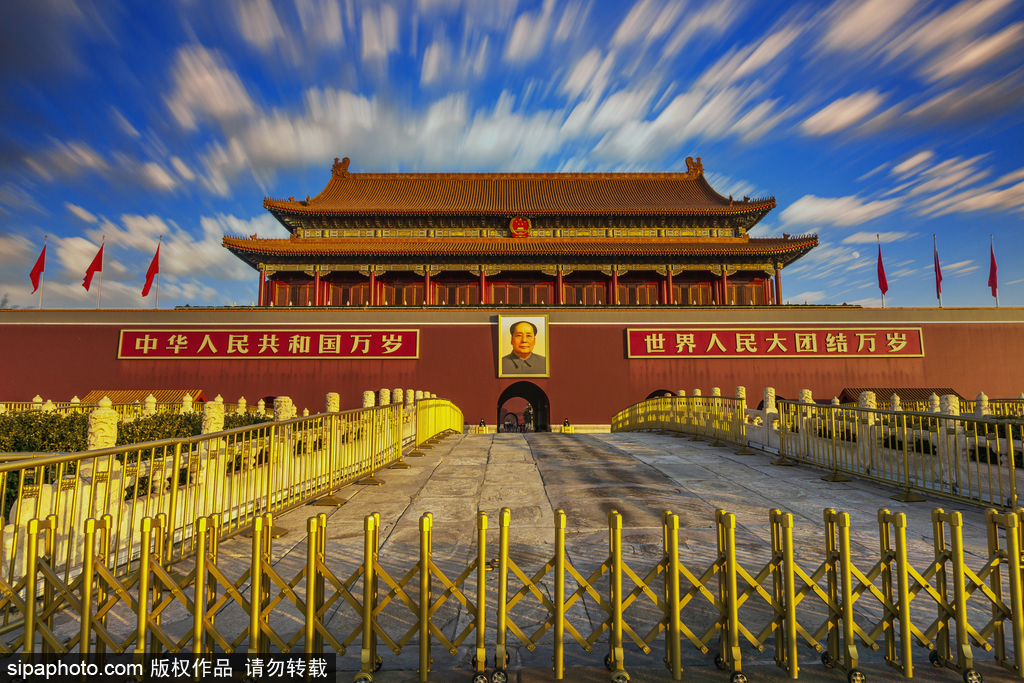
On October 10, 1925, the Palace Museum was established, and Tiananmen Gate began to open to the public. On October 1, 1949, the founding ceremony of the People's Republic of China was held here, and it was designed into the national emblem and became one of the symbols of the People's Republic of China. In 1961, Tiananmen Gate was announced by the State Council as one of the first batch of national key cultural relics protection units.
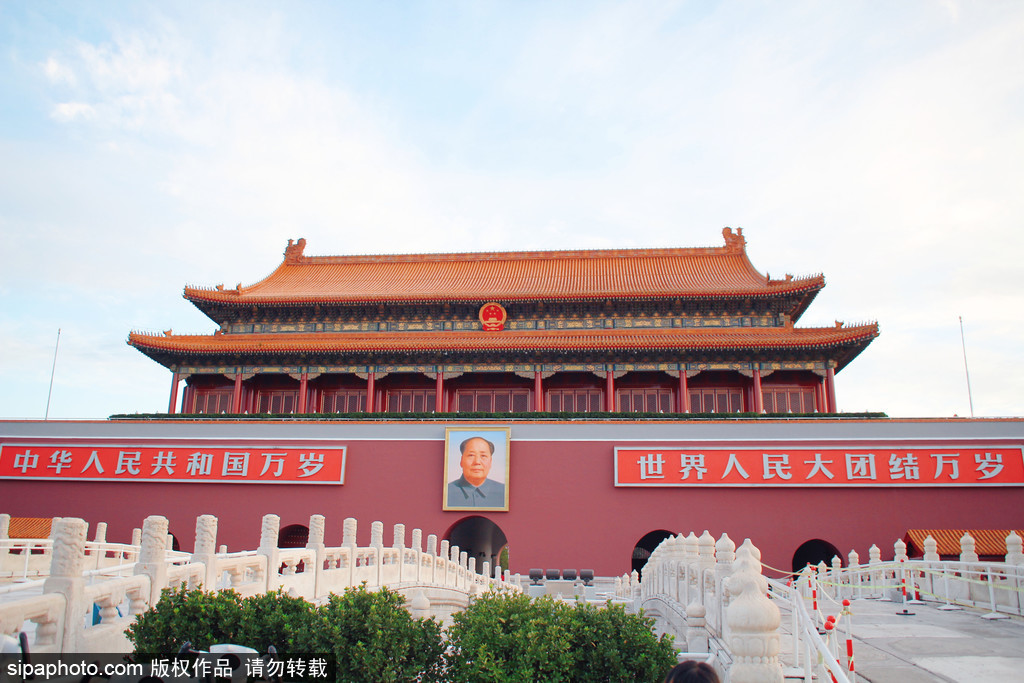
The emperors of the Ming and Qing dynasties generally issued important edicts in Tiananmen Gate, known as "Golden Phoenix Edicts" (“Jinfeng Banzhao”). In addition, important ceremonies such as the emperor's wedding, the sacrificial flags of generals when they go on expeditions, the dedication to roads when the emperors personally led his soldiers in a military operation, the arraignment of key criminals by the Ministry of Punishment in the autumn ("Autumn Trial"), and the announcement of the "Three Tops" ("Jindian Chuanlu") in the palace examination are also held here.
After 1949, Tiananmen Gate underwent several renovations, of which the two renovations in 1952 and 1970 were relatively large. Since mid-November 1988, it has been open to the public for fees. If all the eight viewing platforms on the east and west sides are open, a total of five or six thousand tourists can be accommodated.
Address: Tiananmen Square, Dongcheng District, Beijing


