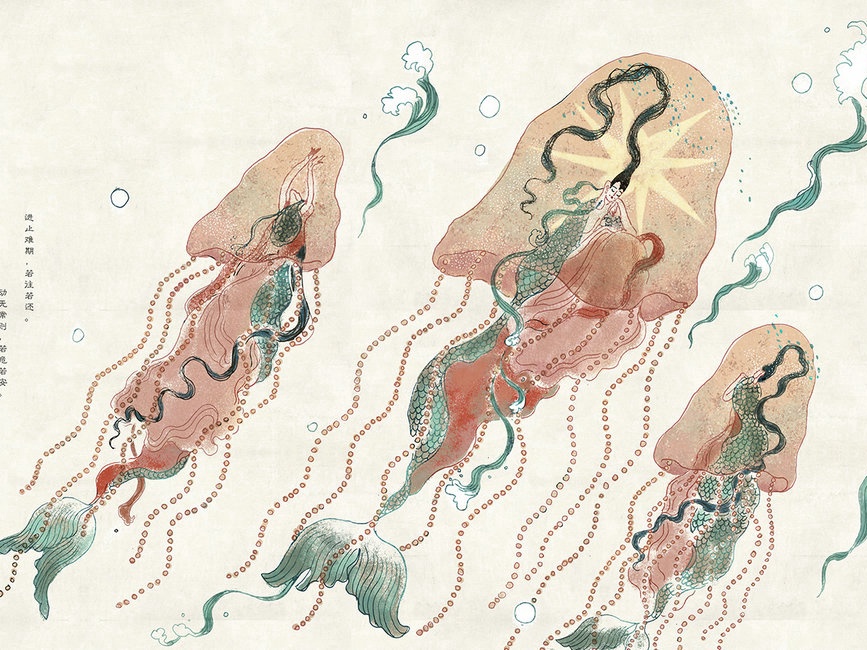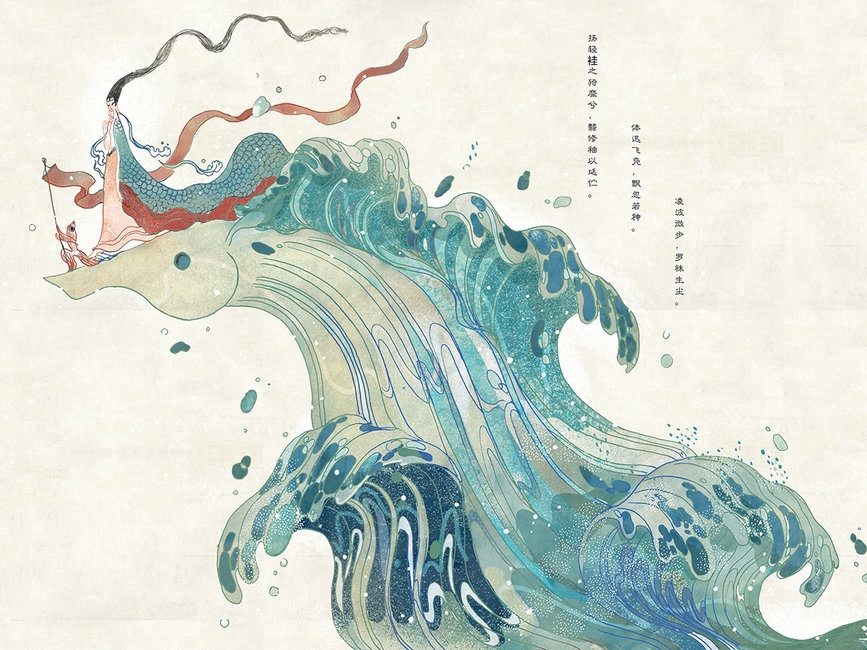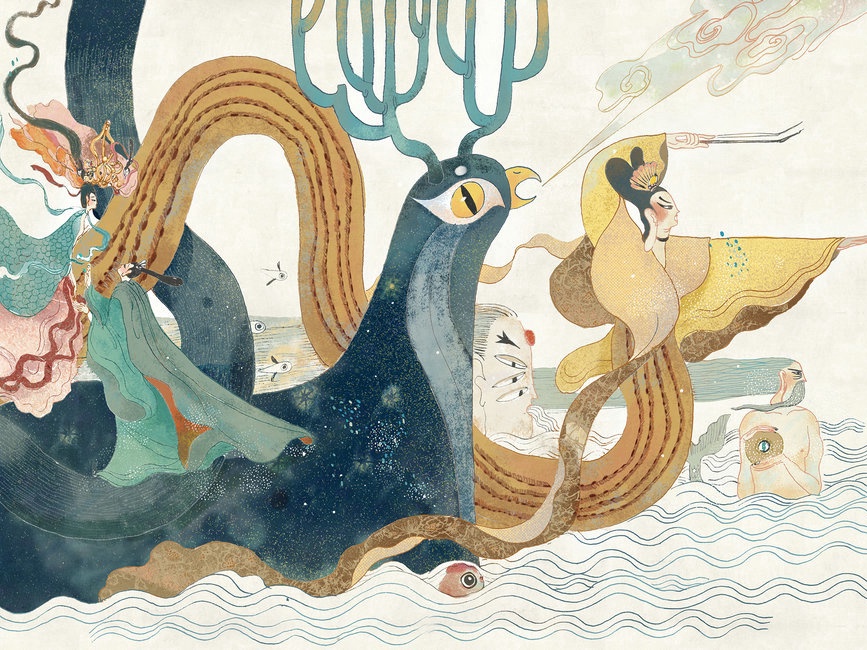
An Ode to the Goddess of Luo is a poetic prose by Cao Zhi, a renowned poet and essayist of the Han Dynasty ( AD 25-220). The poet narrates his encounter with the astonishingly beautiful Goddess of Luo, how they fall in love with each other, and the inevitable sad ending to their romance.
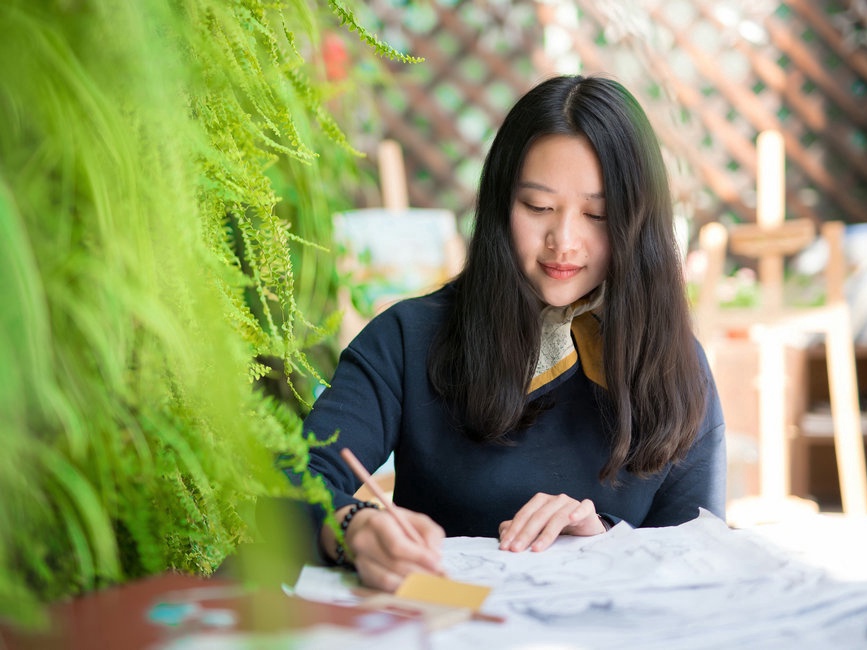
A series of illustrations created by post-90s illustrator Ye Luying has recently drawn people's attention to this Chinese prose. Ye is an independent illustrator and designer, who studied at the China Academy of Art and Oslo National Academy of the Arts. She has already published several picture books prior to the goddess of Luo series.
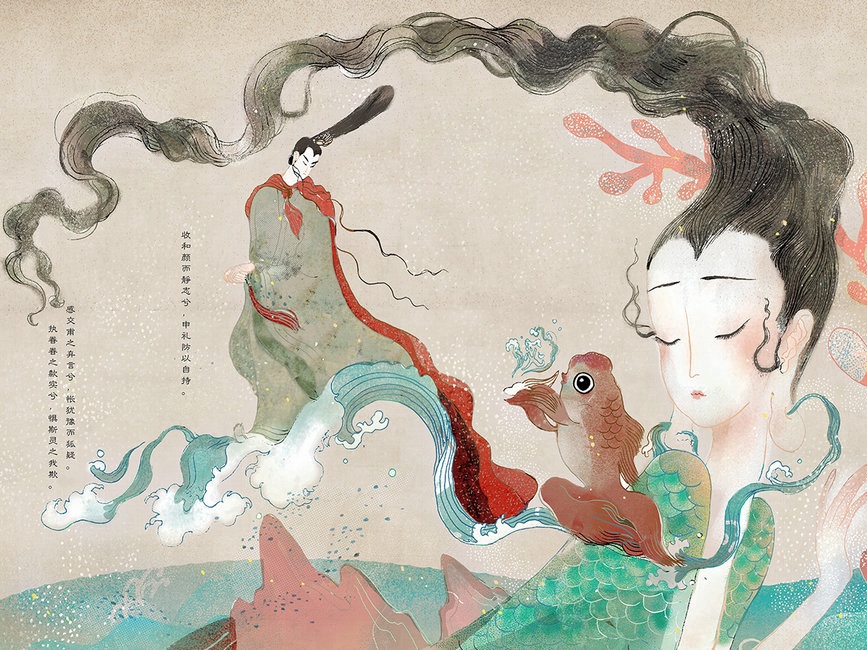
"It has always been my dream to become a painter. I grew up as the only child in my family and my paintbrush was my pal," Ye said. "Painting serves as an indispensable part of my life. In some way, my work is me."
"My first inspiration to recreate An Ode to the Goddess of Luo derived from my overseas experience. Being detached from my cultural upbringing and familiar surroundings provided me a unique opportunity to reflect on my cultural roots. I think that moment of revelation guided me to return to traditional Chinese literature and appreciate the beauty of it."Cao Zhi's prose is commonly known as a love story full of pathos. But from Ye's point of view, the emotions it harbors are much stronger and more complex.
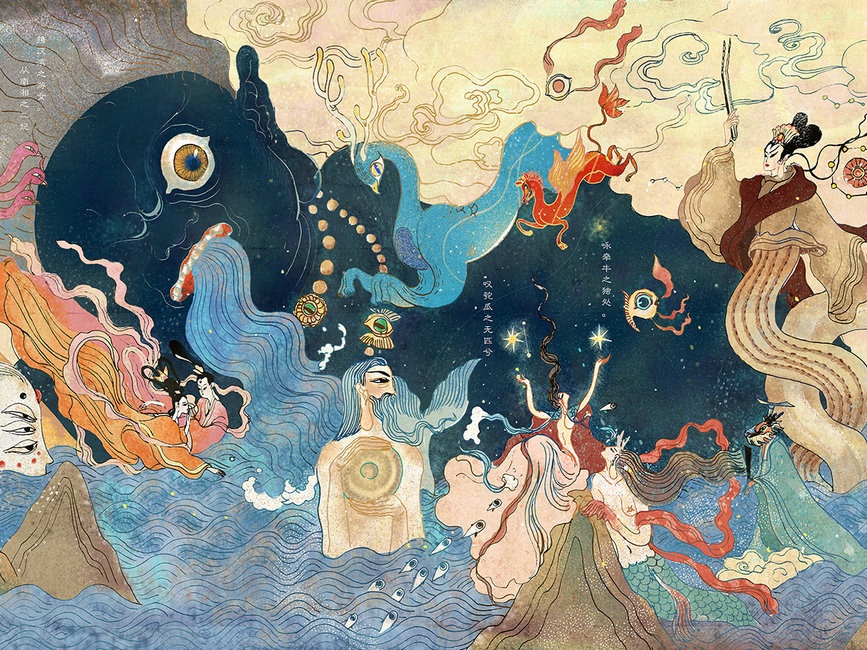
"An intoxicating dream ends and people will eventually face the reality. An Ode to the Goddess of Luo portrays the love within sight but beyond reach, which echoes a universal sense of loneliness. I was so touched by its slight tinge of sorrow when I first read it," Ye said.
The most famous interpretation of the prose is Nymph of the Luo River by Gu Kaizhi, a celebrated painter of the Eastern Jin Dynasty (AD 317-420). Gu's work also ranks as one of the top 10 traditional paintings in Chinese art history."Gu is my idol. His representation of the nymph and the legend is flawless. I need to blaze a new trail by infusing modern elements into the original characters. So I integrate this classical story with contemporary art style."

During the early stage of her creation, Ye spent half a year traveling hundreds of miles to different libraries and museums. She went through relevant documents and paintings to ensure the historical accuracy of her illustrations. She also hopes that readers can feel the personal touch she bestowed upon every character.
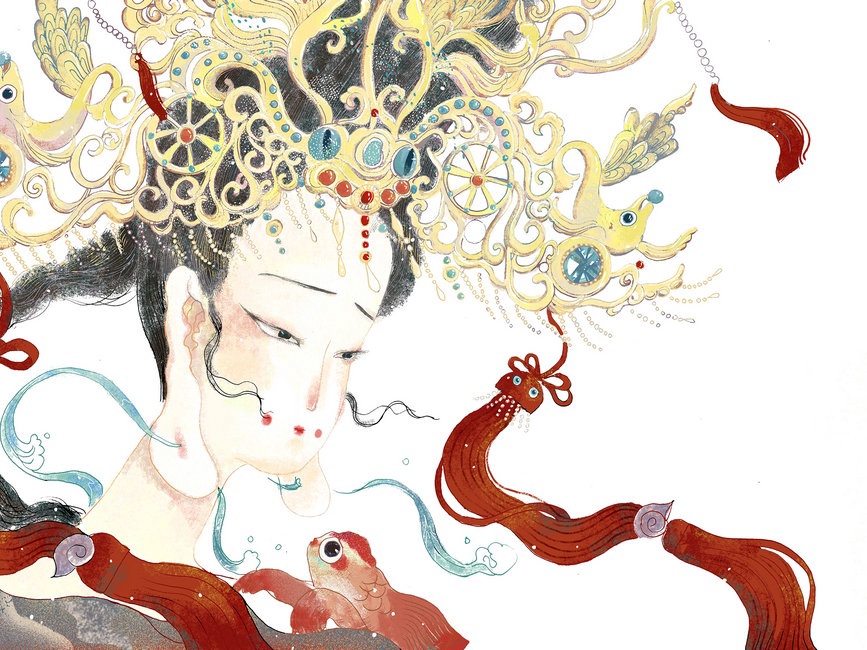
"I have invested a lot of energy in recreating the central figure of the tale, the Goddess of Luo," Ye said. "After studying the paintings of Gu Kaizhi and Dunhuang murals, I made a bold decision of portraying the goddess with partial nudity. I want to depict a fresh image of the goddess, combining the traits of both Taoism and Buddhism."
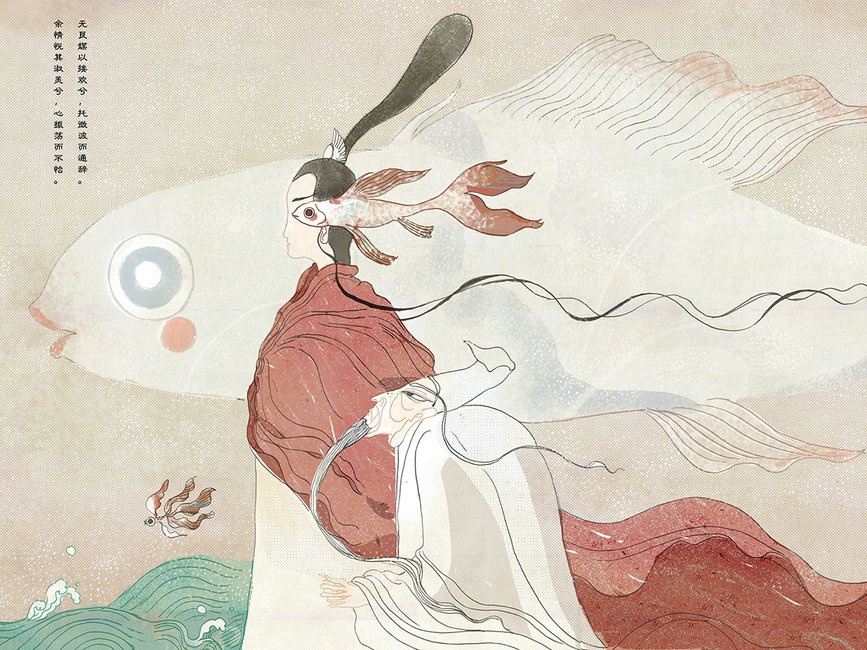
"The accessories and clothes are carefully chosen according to the prose and other historical documents. Cao Zhi explains that the goddess wears gold and emerald jewelries with bright pearls to add radiance to her body. I think the most natural matter may as well be the most radiant one. That is why I replaced the jewels with water splashes, which flow and glitter in the sunshine," Ye added.
Almost every supporting figure and every piece of accessory in this illustration series are designed by Ye herself. "For instance, I created the goldfish next to the goddess to serve as an embodiment of her emotions. This is a technique rarely used in traditional Chinese paintings."
Besides artistic design, Ye believes the most significant part of creating illustrations is effective communication.
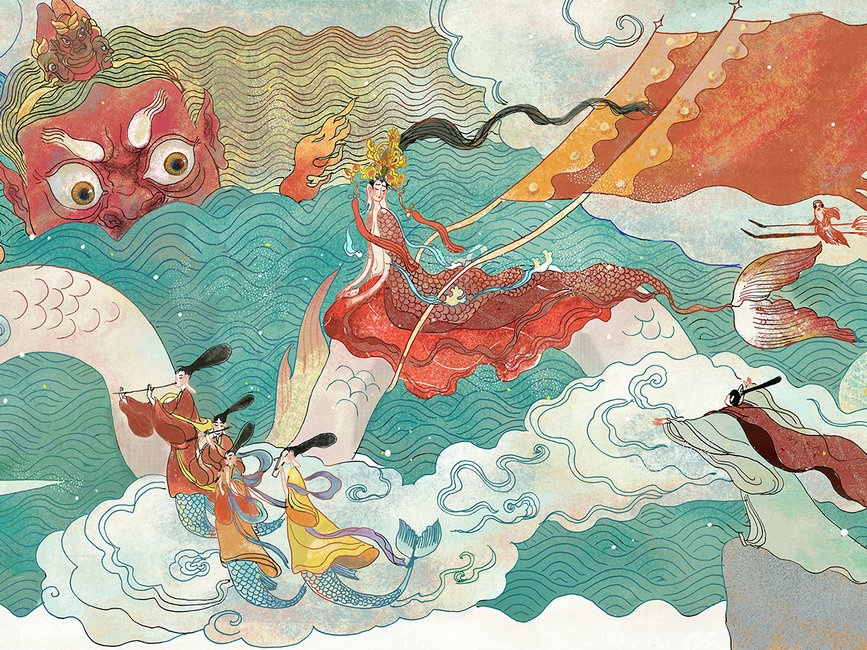
"To understand this prose is to feel melancholy, not depression. I think 1,000 readers will lead to 1,000 Goddesses of Luo. My work only offers one way to appreciate this classical story."
The picture book about An Ode to the Goddess of Luo will come out next year. "I am very excited about it," Ye said. "I hope 10 years later I can make some achievements as an illustrator by interpreting traditional Chinese art in a modern way. I will always pursue breakthroughs in the future."