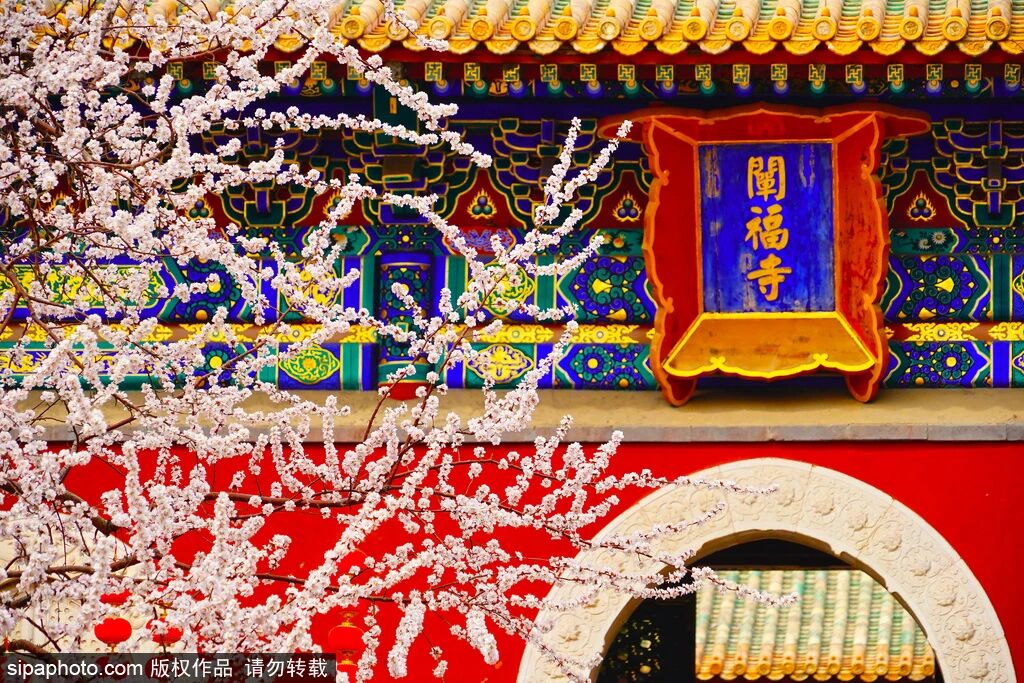
The Virtual TourismBeijing Botanical Gardenis a comprehensive botanical garden which integrates science, scientific research, travel and other functions, and is one of the important botanical gardens built within China. Beijing Botanical Garden is situated between the Fragrant Hills and Yuquan Mountain (near the Reclining Buddha Temple in Xishan Mountain) in Haidian District. Approved by the State Council to build in 1956, Beijing Botanical Garden is a large-scale comprehensive botanical garden which integrates scientific research, botanical education, sightseeing and leisure, seed resource preservation, new good quality plant promotion and features.

The garden's planned area covers 400 hectares, and 200 hectares for sightseeing has already been built and is open to the public until now. It consists of a plant exhibition section, cultural relic section, scientific research section and nature reserve section. The introduced and cultivated plants in the garden total over 10,000 (including species) kinds containing 1,500,000 plants. Covering an area of approximately 900 Mu (One Mu is equal to about 666.67 square meters), a collection of over 3,000 kinds of plants, it serves as the largest botanical garden in North China today and also a scientific research base which specializes in research and experimentation in the theoretical introduction and domestication of plants. Centered on the Plant Exhibition Greenhouse, it features 13 exhibition halls in total, including over 1,500 kinds of tropical and subtropical plants, amongst which there are stone flowers, bachelor trees, dancing orchid and other precious plants.
Beijing Botanical Garden is situated at the foot of Xishan Mountain. Since its establishment in 1956, 200 hectares of garden greenery has already been built, over 560,000 cultivated plants have been introduced, including 5,000 species, and 900,000 square meters of meadow has been cleared. The main is that of exhibiting the plant resources from Northeastern China, Northwestern China and Northern China along with the subtropical ornamental plants from the center of China and Southern China. It does not only feature science, but also has a garden feel.
According to the principle of taking measures based on local conditions, building gardens by using current terrains, and highlighting making scenery with plants, the botanical garden has built up a pine and cypress zone and over 10 special category gardens, which have their own unique styles and features. Among them there is the Chinese impressionistic and idyllic style, the tidy and prudent outlay existing in the French palace, and also an open and stretched British style one. The trees and flowers in each garden all flourish, and vivid statues and exquisite pavilions are hidden among them.
The garden has many exhibition halls, such as the Tree Garden, Perennial Flower Garden, Chinese Rose Garden, Peony Garden, Chinese Herbal Medicine Garden, Wild Fruit Resource Zone, Green Plant Zone, Aquatic and Vine Plant Zone, Rare and Endangered Plant Zone and Tropical Greenhouse.
The botanical garden has fostered over 6,000 kinds of plants, including 2,000 trees and shrubs, 1,620 kinds of tropical and subtropical plants, 500 kinds of flowers, 1,900 kinds of fruit trees, aquatic plants, Chinese herbal medicinal plants and so on.
The Tropical Greenhouse is one of the highlights of the botanical garden, including four exhibition halls: Tropical Rainforest Exhibition Hall, Four Seasons Flower Garden Exhibition Hall, Desert Plant Exhibition Hall and Special Category Plant Exhibition Hall, exhibiting typical botanical views under different climate conditions.
Many of the plants in the botanical garden are of rare species. For example, metasequoia was first found in Hubei and Sichuan province by Chinese scientists in 1941. At that time it was believed that metasequoia become extinct in the Cenozoic Tertiary (65,000,000 years ago) age. The finding of the living specimen in China shocked those in the field of botany .
Other plants in the botanical garden also include the nepenthes capable of capturing and eating insects, sequoia donated by the former American President Nixon, cherry donated by the former Japanese Prime Minister Tanaka, oncidium donated by the former Philippine President Ferdinand Marcos, and pipal tree donated by the former Sri Lankan Prime Minister Sirimavo Bandaranaike (The Lord Buddha found enlightenment under a pipal tree in ancient India). The last emperor of the Qing Dynasty Puyi worked in the garden during his later years.
Beijing Botanical Garden also features the attractions such as Beijing Reclining Buddha Temple, Liang Qichao’s Tomb, Sun Chuanfang’s Tomb, Cao Xueqin Memorial, Yingtaogou, December 9th Movement and others.