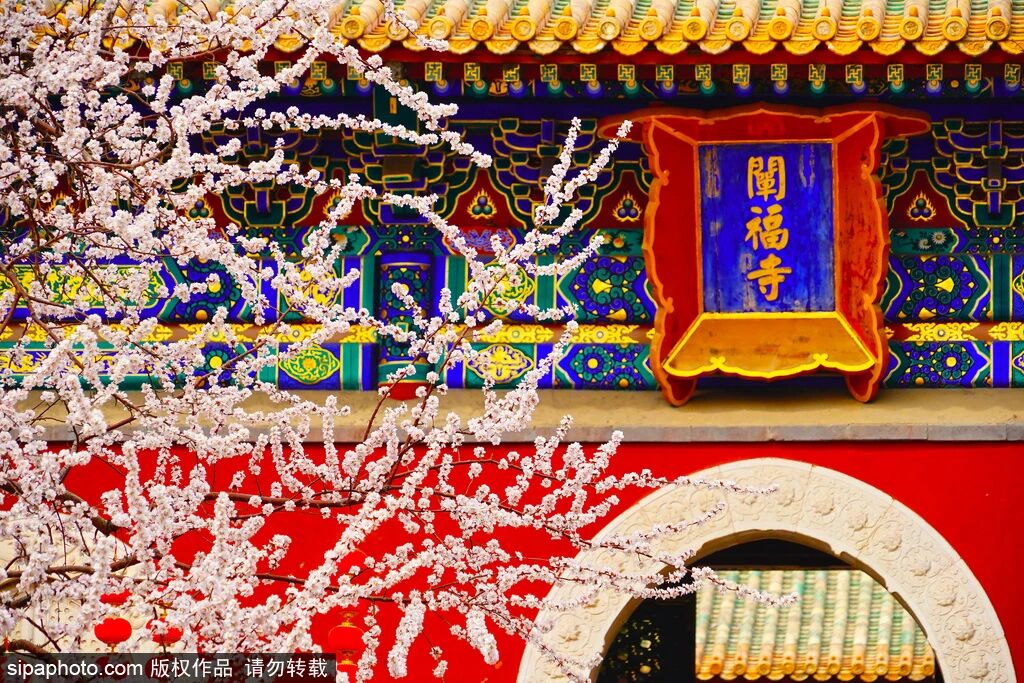
InsideBeihai Parkare built exquisite constructed pavilions and passages which wind all around. The entire park was designed according to the myth “One Pond and Three Immortal Mountains (Taiye Pond, Penglai Mountain, Abbot and Yingzhou)”. With a unique style and strong imagination, the park features wide surface waters, ancient pagodas, green pine and cypress trees, fragrant flowers, pavilions and antique buildings and interesting rockeries. All of them look exceptionally gorgeous like a wonderland. On top of Qiongdao Island are located the 67-meter-tall White Tibetan Tower (built in 1651), Qiongdao Chunyin Monument belonging to the Top Eight Yanjing (Beijing) Attractions named by Emperor Qianlong during the Qing Dynasty, rockeries, tunnels and others. On the east bank stand the Huafang Study, Haopu Valley Stream, Mirror Clean Study, Tianwang Hall Nine Dragon Wall and other buildings; in the south stands the Beihai Tuan City, on which there is a well-designed hall named Chengguang Hall amongst the lush pine and cypress trees. Beihai Park was one of the entertainment places for the emperors and the Nine Dragon Wall is the most famous one.

Being one of the masterpiece gardens in Chinese history, Beihai Park covers an area of 69 hectares (39 hectares of water coverage), mainly comprised of Qionghua Island, east bank and north bank. The garden inside Beihai Park has obtained the brilliant features of other gardens, so that it not only has the spectacular view that Northern China gardens feature, but it also internalizes the slender beauty of private gardens in Jiangnan (the area around Jiangsu and Zhejiang Provinces). In addition, it also contains the luxury of imperial palaces and the solemnity of religious temples. It boasts all kinds of wonders but still keeps them in a harmonious manner, and serves as the treasure house of Chinese garden art.
Beihai Park is located in the center of Beijing, and is one of the best-preserved imperial gardens with the longest history in China today, with nearly 1,000 years of history. The development of the gardens originated from the Liao Dynasty, and the spectacular Taining Palace was built during the Jing (gold) Dynasty in 1179 based on the techniques gained during the Liao Dynasty. The park possesses a variety of recreational boats, has entertainment activities, holds different kinds of exhibitions all year round, and has become one the most-visited attractions for tourists from China and across the world.