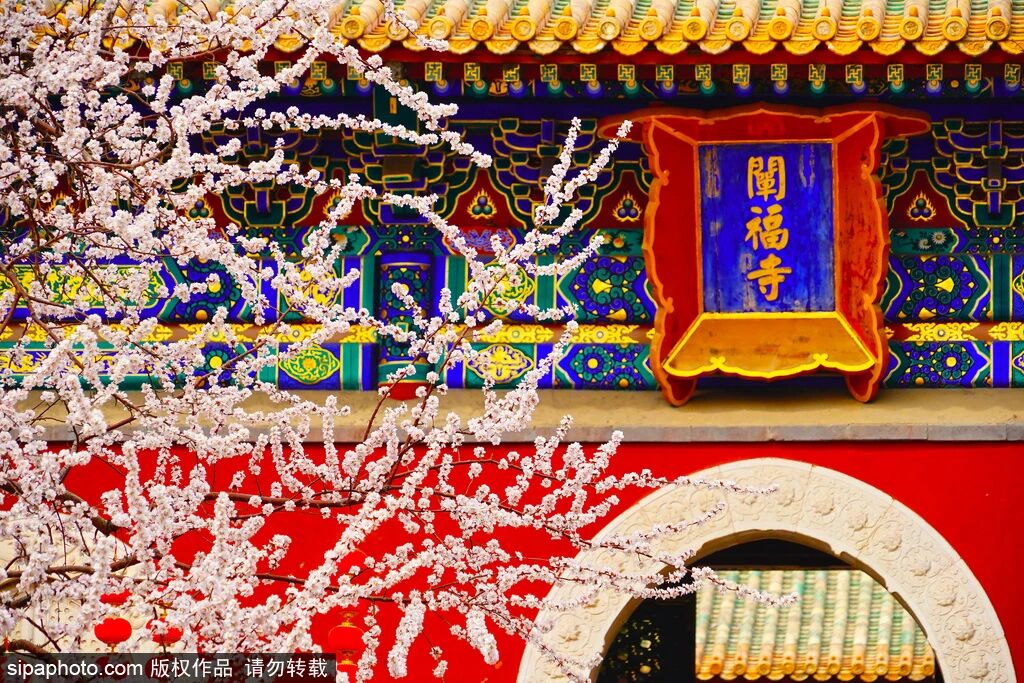
The annual "International Museum Day" is coming again. This article will cover some interesting museums in Beijing. In Xicheng District, there is the Capital Museum with rich exhibition themes; At Lu Xun Museum, you can get to know what Mr. Lu Xun had done to wake the Chinese nation; and there is Beijing Xuannan Cultural Museum, which carries almost all the memories of the old Beijing...

Capital Museum
The new building of the Capital Museum began trial operation in December 2005 and officially opened on May 18, 2006. With its grand architecture, rich exhibitions, advanced technology, and perfect functions, the Capital Museum has become a large-scale modern museum commensurate with Beijing's status as a "historical and cultural city", "cultural center" and "international metropolis", and ranks among them. In the ranks of "domestic first-class, international advanced" museums.

The architectural design concept of the Capital Museum is "people-oriented, cultural relics-oriented, and serving the society", emphasizing the "harmonious unity of past and future, history and modernity, art and nature". The building itself is an architectural artwork that combines classical beauty and modern beauty. It not only has strong national characteristics, but also presents a distinctive modern sense.

The huge roof inherits the far-reaching eaves of traditional Chinese architecture; the long stone curtain wall symbolizes the ancient Chinese city wall; the rise of the square inherits the ancient high platform architectural style; the Qing Dynasty Danbi is inlaid on the ground outside the north gate of the hall. The archway of the Ming Dynasty reflects the characteristics of the central axis of the traditional Chinese architecture; the oblique bronze pavilion leaning out of the wall implies that ancient cultural relics have emerged from the ground. The new building is divided into three independent buildings, namely: a rectangular exhibition hall, an oval thematic exhibition hall, and a strip-shaped office research building.

The space between the three is the central hall and the indoor bamboo courtyard. The use of natural light, the quaint Chinese archway, the sunken bamboo courtyard, and the gurgling water create an environment that is both humanistic and natural for the audience. Once the museum building was completed, it was praised by people from all walks of life at home and abroad.

The exhibitions in the new museum are based on the historical collections of the Capital Museum and the unearthed cultural relics in Beijing. It absorbs the latest research results of Beijing history, cultural relics, archaeology and related disciplines, it draws on the successful experience of domestic and foreign museums, and forms a modernization with unique Beijing characteristics. Exhibition. The positioning of the Capital Museum determines the composition of the first exhibition: basic display, boutique display and temporary exhibition. The basic display includes "Ancient Capital Beijing: History and Culture" and "Old Things in Beijing-Old Beijing Folk Custom Exhibition".
"The Ancient Capital of Beijing · History and Culture" is the core of the exhibition of the Capital Museum. It shows the magnificent Beijing culture and the history of the city's continuously rising and glorious development. It has become a brand display for creating a domestic first-class museum. Exquisite displays include "Exhibition of Ancient Porcelain Art Exquisites", "Exhibition of Yandi Bronze Art Exquisites", "Exhibition of Ancient Calligraphy Art Exquisites", "Exhibition of Ancient Painting Art Exquisites", "Exhibition of Ancient Jade Art Exquisites", "Exhibition of Ancient Buddhist Art Exquisites" ". The six exquisite exhibitions in the collection and the "Old Things in Beijing-Old Beijing Folk Custom Exhibition" complement and deepen the exhibition of Beijing culture.
The New Museum of the First World Expo is not only an important cultural facility, but also a base for the protection of cultural relics, cultural relics research, and the spread of patriotism, history and scientific knowledge to the public and young people in Beijing. It is also an important place for Beijing to host rituals and celebrations. It is also an ideal place for people to travel and relax.
On the occasion of the 100th anniversary of the founding of the Communist Party of China, the "Great Journey-Special Exhibition for Celebrating the 100th Anniversary of the Founding of the Communist Party of China" is being held by the Capital Museum, which exhibited a total of 280 components of pictures, photos and real objects, which has attracted widespread attention.
Opening hours: 9:00-17:00 (Last admission at 16:00, closed on Monday)
Address: No. 16, Fuxingmenwai Street, Xicheng District, Beijing
Beijing Lu Xun Museum
The Lu Xun Museum area is located at No. 19, Gongmenkou Ertiao, Fuchengmennei Street, Xicheng District, Beijing. The museum area includes Lu Xun's former residence and Lu Xun's Biography Exhibition Hall.

There are more than 70,000 pieces of cultural relics and books in the collection of Lu Xun's biography, including 759 national first-class cultural relics. There are mainly Lu Xun's manuscripts, biographical materials, collections of books, Tibetan paintings, Tibetan stele rubbings, Tibetan friends' letters and other cultural relics; there are the remains of historical figures from the New Cultural Movement period such as Xu Guangping, Zhou Zuoren, Zhou Jianren, Zhang Taiyan, and Qian Xuan; there are a large number of Lu Xun's writings, translations, compilations, editions and editions of Lu Xun's research works, modern literature series and new and old periodicals; there are also a large number of masterpieces of Chinese and foreign prints, as well as works by a group of painters such as Wu Guanzhong, Li Keran, and Jiang Zhaohe.

To the west of Lu Xun's Biography Exhibition Hall is the former residence of Lu Xun, which is also the last residence of Lu Xun in Beijing.

This is a small courtyard house with blue tiles and gray walls. The house number "Xisantiao Hutong No. 21" hung on the east wall can still be vaguely identified. Next to it is the sign of "Lu Xun's Former Residence" written by Guo Moruo. Behind the hall, there is a small house directly out there. What Beijingers call "Tiger's Tail" is Lu Xun's bedroom and studio. This room was designed and rebuilt by Lu Xun himself.

In this small room, Lu Xun wrote three books, "The Canopy Collection" and "The Canopy Collection Sequel" and "Weeds". "In my back garden, you can see two trees outside the wall. One is a jujube tree, and the other is also a jujube tree." This famous sentence was written on the desk in front of me.

In addition to learning about these historical documents and stories, when you come to the Lu Xun Museum, there are a lot of fun. For example, it is said that this is the bookstore with the most comprehensive collection of Lu Xun-related books in Beijing, and there are cafes and teahouses with a literary atmosphere.
Opening hours:
Address: No. 19, Gongmenkou Ertiao, Fuchengmen Inner Street, Xicheng District, Beijing
Transportation: Get off at Fuchengmen Station of Metro Line 2
Beijing Xuannan Cultural Museum

The Xuannan area, as the place where Beijing was founded as a city and capital, bears almost all the memories of the old Beijing. This is the area with the highest concentration of literati culture and commoner culture standing on top of the imperial city culture. Liulichang, Dashilan and Tianqiao constitute the unique scenery in the south of Beijing. The Xuannan Cultural Museum in Beijing, built on Changchun Temple, the "first temple of the capital" in the Ming Dynasty, tells people about the breadth and depth of Xuannan culture on this land.

1. Yoyo Xuannan Exhibition Hall
The Yoyo Xuannan Exhibition Hall records the ancestors who lived in Beijing more than 3,000 years ago. It tells the magnificent history of the ancient city of Beijing through the Qin, Han, Sui and Tang Dynasties, Liao, Jin, Ming and Qing Dynasties.

2. Xuan Nan Shixiang Exhibition Hall
Xuannan scholar culture arose in the Ming Dynasty and flourished in the Qing Dynasty. The formation of an active academic atmosphere and a literary environment of association and singing resulted in the phenomenon of "Xuannan Shixiang" under the capital city, creating a unique space for the cultural prosperity of the Qing Dynasty. In the later period of the state crisis, in the land of Xuannan, bans on smoking, reforms, newspapers, education, and shouting for the survival of the nation were promoted, and scenes of tragic historical dramas of modern China were performed.
3. Revolutionary Pioneers Exhibition Hall
On the fertile soil of Xuannan, many revolutionary pioneers stood at the forefront of the times, exploring the road to national rejuvenation, and composed a series of magnificent poems about saving the country and the people and fighting the reactionary forces. These include: Xu Xilin, Qiu Jin, Sun Yat-sen, Huang Xing, Chen Duxiu, Li Dazhao, Mao Zedong and Zhou Enlai. They all left footprints of life and battle here.

4. Liyuan Shengjing Exhibition Hall
Peking opera is known as the "quintessence of the country" and has an mysterious bond with Xuan Nan. The 200-year history of Peking Opera has left its mark on Xuannan. On this fertile soil, masters of Peking Opera such as Cheng Changgeng, Tan Xinpei, Yang Xiaolou, Mei Lanfang, and Ma Lianliang. Hundreds of famous actors live in the quiet alleys of Xuannan. So Xuan Nan is a well-deserved "Hometown of Peking Opera".
There are 8 exhibition halls in the Xuannan Cultural Museum, including the Chengnan Paradise Exhibition Hall, the Centennial Business Exhibition Hall, the National Unity Exhibition Hall and the Xuannan Cultural Protection and Development Achievement Exhibition Hall, making outstanding contributions to the promotion of Beijing culture.
As the saying goes, studying the history and culture of a city cannot be separated from the origin of the city. "Xuannan" is one of the origins of Beijing, which has a history of three thousand years. So if you want to really understand Beijing, then Xuannan Cultural Museum is worth a visit!
Opening hours: 9:00 am-4:30 pm (closed on Monday)
Address: No. 9 Changchun Street, Xicheng District, Beijing
Translator: YAO Yuhou