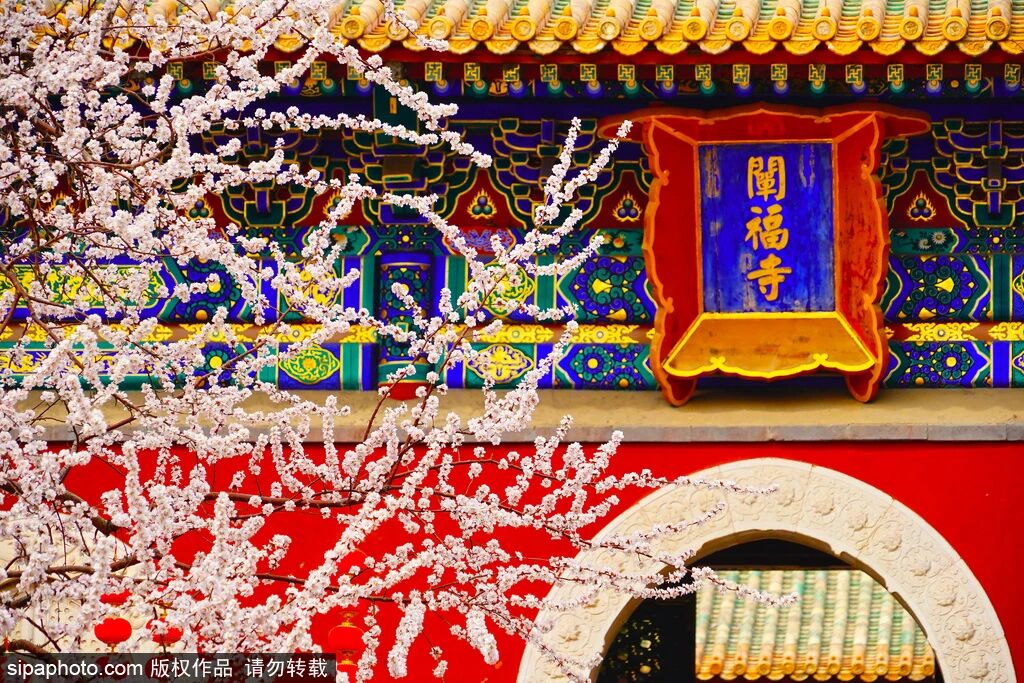
On May 14, 1957, Beijing Fine Art Academy was officially established, with Qi Baishi as Honorary Dean. Research and exhibitions on Qi Baishi remain the academic brand of the Academy. However, the research and promotion of Ye Gongchuo, the very first Dean, is rarely mentioned. This year marks the 140th anniversary of Ye Gongchuo's birth.

On November 12, Beijing Fine Art Academy specially planned and launched the special exhibition in celebration of Ye Gongchuo's 140th birth anniversary "Calligraphy, Paintings, Friendship & Art Collection of Ye Gongchuo".

Young as Ye Gongchuo was, he seemed to have foreseen his whole life: from the time he created the poem Tie Lu Fu (Poem of the Railway) at the age of 18 until he founded Jiaotong University; from member of the Qing Dynasty Department of Posts and Communications to Minister of Railways of the National Government; from descendant of the Ye family of Guangdong to an important person of the twentieth century. Throughout Ye Gongchuo's lifetime, he has made indelible contributions to the protection and heritage of traditional culture, and has also promoted the development of transportation, education, and cultural activities of modern China.

The exhibition has received the great support of thirteen organisations, including the Central Institute of Culture and History of China, the Palace Museum, the National Museum of China, the National Art Museum of China, the Liaoning Provincial Museum, the Guangdong Provincial Museum, the Jilin Provincial Museum, the Suzhou Museum, the Shenyang Palace Museum, Wuxi Museum, Guangzhou Art Museum and He Xiangning Art Museum, Guangzhou Haichuang Temple, etc. From the three perspectives of artistic life, friendship in painting, and collections of calligraphy and paintings, the exhibition introduces to the public this extraordinary cultural master, Ye Gongchuo.
Ye Gongchuo's multiple identities
Ye Gongchuo, whose courtesy name is Yufu(裕甫), Yufu(玉甫), or Yuhu(誉虎), whose art name is Xia'an and Xia Weng later, was originally from Panyu (now Guangzhou), Guangdong. He was born on November 24, 1881 at the residence of Grandfather Ye Yanlan in Mishi Hutong, Beijing, and died of illness in Beijing on August 6, 1968.

Ye Gongchuo can be considered an "encyclopedia" figure in the history of Chinese culture in the twentieth century: he was a pioneer in modern transportation and transportation education, and served as director of the Roads Department of the Ministry of Transport and director general of the Railway Administration in the Qing court. In 1921, he became the head of transportation of the government of the Republic of China and the dean of Jiaotong University. He is also an elegant and patriotic connoisseur and collector, and has dedicated his life to the collection and protection of cultural relics.

Together with Zhu Qiqian, he created the China Architecture Society and served as chairman of the Shanghai Museum Council and a board member of the Palace Museum. In 1939, Ye Gongchuo organized and initiated the Chinese Cultural Association, planned and organized exhibitions of cultural relics, and devoted himself to the public welfare activities of Buddhism, art, and culture. In his later years, he donated his collections of classic books, paintings, calligraphy, inscriptions, objects and other cultural relics to museums and libraries in Beijing, Shanghai, Guangzhou, Suzhou, Qingdao and elsewhere.


Ye Gongchuo was a promoter of the development of cultural activities in New China. He was a member of the Cultural and Educational Committee of the Central People's Government, a member of the Standing Committee of the Chinese Character Reform Commission, and acting director of the Central Museum of Literature and History.

Ye Gongchuo's artistic life
In 1882, Ye Gongchuo's grandfather Ye Yanlan ended his more than two-decade career as a civil servant in Beijing and returned to his hometown in Panyu, Guangdong (now Guangzhou) with Ye Gongchuo, who was more than a year old. After returning to Guangdong, Ye Yanlan not only lectured at Yuehua Academy, but also began to compile his own collection of poetry and essays, continuing his interest in poetry, essays, calligraphy and painting, and appreciation and collection since his youth.

These interests are not only derived from Ye Yanlan's enthusiasm for learning and befriending, but also from the Ye family's deep family learning tradition. It was also under the influence of his grandfather that Ye Gongchuo became enlightened and began to read the Four Books when he was four years old, and he was able to compose poems when he was five or six years old. Ye Peicang, Ye Gongchuo's uncle, adopted Ye Gongchuo as a son. He bought many books for himself and took him to meet the literati, which laid a good foundation in literature and history for his future development.


Friendships in Ye Gongchuo's painting
As an important political figure and cultural instructor in the late Qing Dynasty and during the Republic of China and New China, Ye Gongchuo traveled to Guangdong, Jiangxi, Beijing, Shanghai, Suzhou, Hong Kong and other places throughout his life.

He befriended a lot of people in every place. His friends are from politics, transportation, culture, appreciation and collection and other fields, including Qi Baishi, Chen Shizeng, He Xiangning, Xu Beihong, Wu Hufan, Zhang Daqian, Huang Banruo, Mei Lanfang, Zhu Qiqian and many other famous artists. Sometimes, they created calligraphy and paintings together.

During other times, they met and cooperated, or exchanged letters, telling us good stories in modern art circles. In the second section of the exhibition, we will introduce the artistic exchanges between Ye Gongchuo and his friends in the modern art world through a large number of calligraphy works and paintings, letters and other documents.


Today, Ye Gongchuo has become a new research focus of the Beijing Fine Art Academy, not only in the field of calligraphy and painting, but also in politics, economics, diplomacy, transportation, communications, medicine and health, cultural relics, archaeology, appreciation and collection among other fields.

Therefore, this exhibition is not only a summary of previous research, but also a new starting point of research. In the words of Rector Wu Hongliang, "Ye Gongchuo himself is an organic system. We need to understand, peel and drill down from the surface, and then connect with related ones to form new comprehensive results, which will trigger a new research momentum."

The exhibition will last until January 16, 2022.